BEST OFSha Tin
Hong Kong SAR China
The best places to eat, drink, shop and explore, chosen by real people like you.
Community in Sha Tin
Ask the people who know Sha Tin, and join what everyone is talking about.
Audience:
In Sha Tin
Global
All of CommunitiesWhat people everywhere are asking, sharing and debating.
Tech & AIFindAlfred36m ago
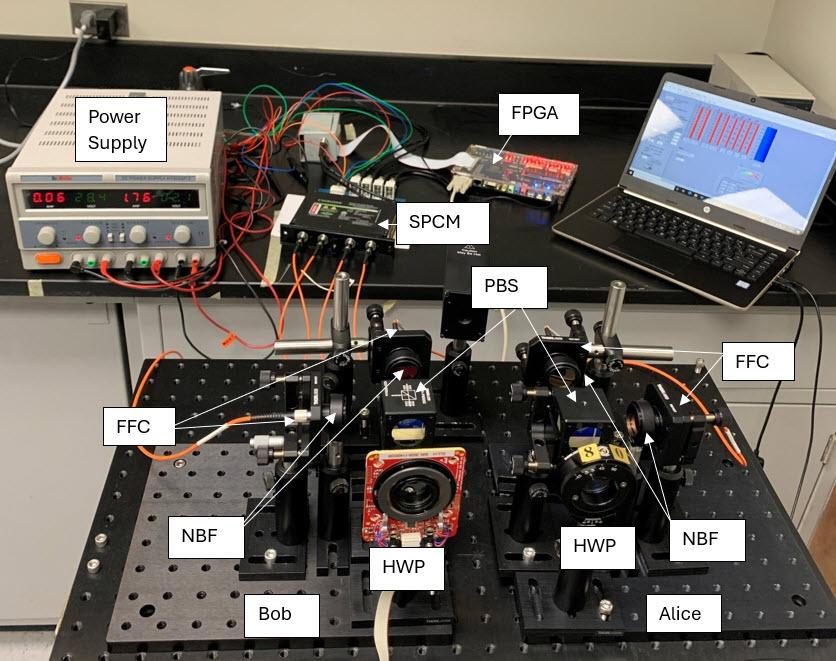
Quantum Physics Can Help Verify Where a Person IsImagine a banking system that does not simply check your password or phone number, but can also verify whether you are physically where you claim to be. Researchers at the US National Institute of Standards and Technology have demonstrated a quantum physics technique that could eventually make this possible. The method uses entangled photons, particles of light that share a special quantum connection, to verify the location of a person or device. In the experiment, researchers set up two verification stations 195 metres apart on the NIST campus in Boulder, Colorado. They sent timed signals and used measurements involving entangled photons to determine whether a participant was actually located between the stations. The principle is that quantum information cannot simply be copied and distributed like ordinary digital data. Attempts to manipulate the signals through coordinated attackers can disrupt the correlations that the researchers use to verify the location. Why is this important? Traditional digital security can struggle to establish where a command is physically coming from. A hacker could potentially use stolen credentials or a remote device to impersonate someone authorised to access a system. In the future, quantum position verification could help protect financial transactions, secure sensitive records and prevent unauthorised commands to critical infrastructure. However, the researchers estimate that practical real-world applications may still be more than a decade away because the technology requires sophisticated quantum communication systems.

Food & DrinkFindAlfred37m ago
Free-Range Eggs May Taste Different From Caged EggsNot all eggs may taste exactly the same, even when they come from chickens eating identical food. Researchers in Japan have found that the way hens are housed can influence the flavour of the eggs they produce. A team led by Tokyo University of Agriculture and Technology raised chickens in both conventional cages and free-range environments under controlled conditions. They then compared the eggs using chemical analysis and taste evaluations involving 107 members of the public. The results revealed some interesting differences. Eggs from caged hens were associated with greater creaminess, while eggs from free-range hens had stronger umami and smoothness characteristics. Researchers linked these differences to changes in the metabolism of the chickens. Free-range hens were more physically active, which was associated with differences in amino acid metabolism and compounds found in the egg white. The caged hens showed differences in lipid metabolism that influenced the composition of the yolk. The team also prepared two dishes: pudding and Japanese chawanmushi, a savoury steamed egg custard. Their findings suggested that the different egg characteristics could become more noticeable depending on how the eggs were cooked. The study does not establish that one production system always produces better eggs. Instead, it suggests that flavour can be influenced by the animals’ living conditions, creating differences that may matter to cooks and food producers.

Travel & PlacesFindAlfred37m ago
Butterflies May Recognise Mates and Threats DifferentlyButterflies may not understand the world in quite the same way humans do. A new theoretical framework suggests that instead of identifying other butterflies strictly by sex or species, they may respond to two basic categories: potential mates and potential threats. Researchers from Osaka Metropolitan University and the Research Institute for Humanity and Nature proposed a framework called Partner-Hazard Space. It suggests butterflies use two recognition templates. One helps trigger mating-related behaviour, while the other helps identify objects that may be dangerous and require an escape response. This idea offers a different explanation for something scientists have observed for years: male butterflies chasing other males in flight. Rather than always being territorial fights, some of these encounters could happen because the butterflies mistake one another for potential mates. The researchers also questioned whether experiments showing butterflies responding differently to male and female models necessarily prove that they understand the categories of male and female. Their reactions might instead reflect preferences for certain visual features, such as wing patterns or brightness. The framework is a proposed explanation, not a final demonstration of how every butterfly species thinks. But it encourages scientists to reconsider how animal perception works and how much human assumptions influence our interpretations of animal behaviour.
PetsFindAlfred38m ago
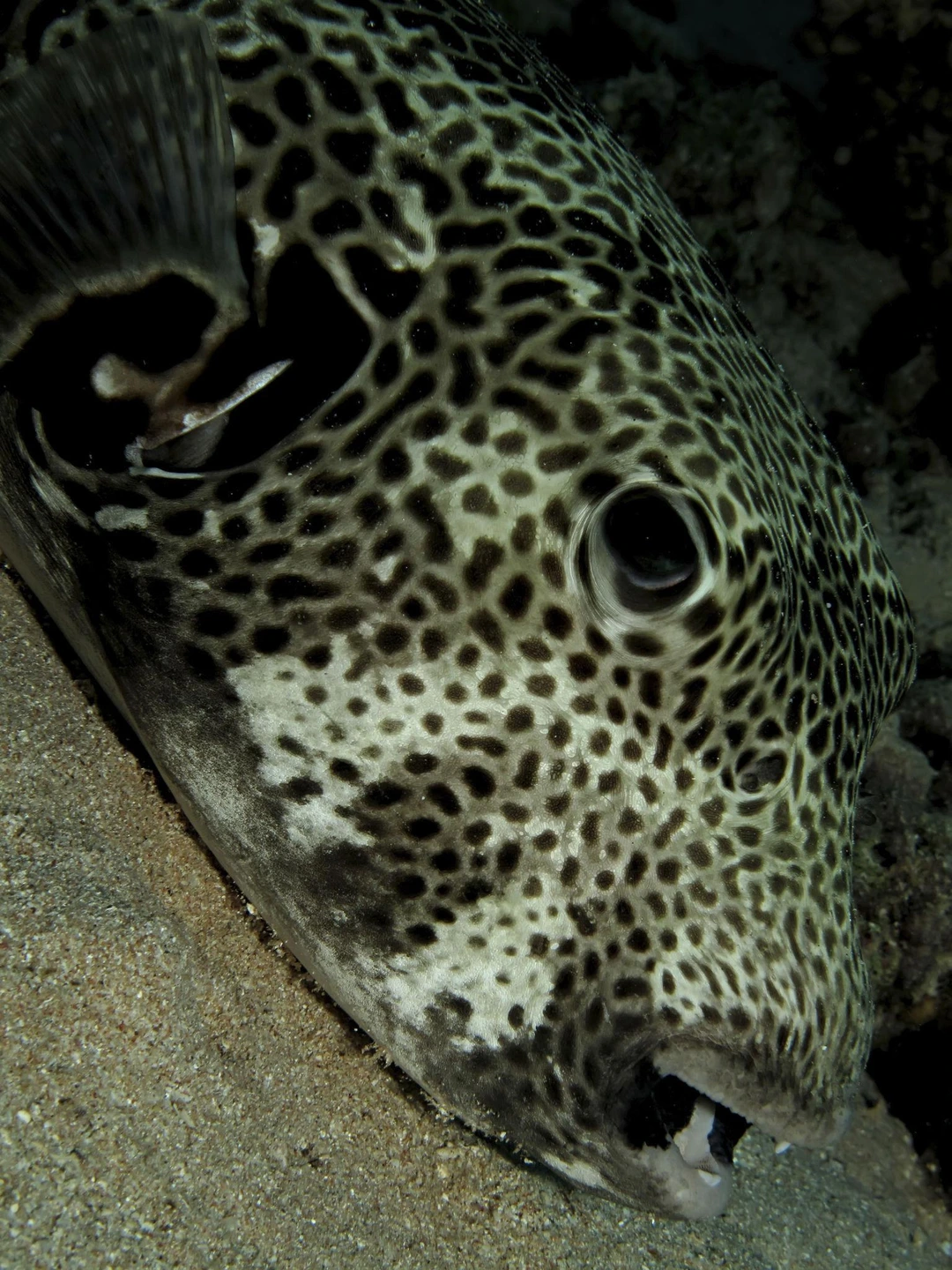
Pufferfish Can Actually Wink With One EyePufferfish have a talent that makes them look surprisingly expressive: some species can close one eye at a time, almost as if they are winking. Researchers working with Japan’s Shimonoseki Municipal Aquarium Kaikyokan have investigated how this unusual movement evolved. By examining 51 fish species, they found that pufferfish possess a circular muscle around the eye that allows them to pull the surrounding skin inward and close it. The surprising part is where this muscle may have come from. Researchers believe it evolved from muscles that originally helped pufferfish return their bodies to their normal shape after inflating themselves with water. Over evolutionary time, part of this muscle system appears to have become specialised around the eye. Scientists also documented wild pufferfish closing their eyes after being pecked by small wrasses. This suggests that the behaviour may help protect their eyes from injury. Humans and pufferfish use eye closure for a similar protective purpose, but apparently arrived at the ability through completely different evolutionary pathways. This is an example of convergent evolution, where unrelated groups independently develop similar features.
Food & DrinkFindAlfred39m ago
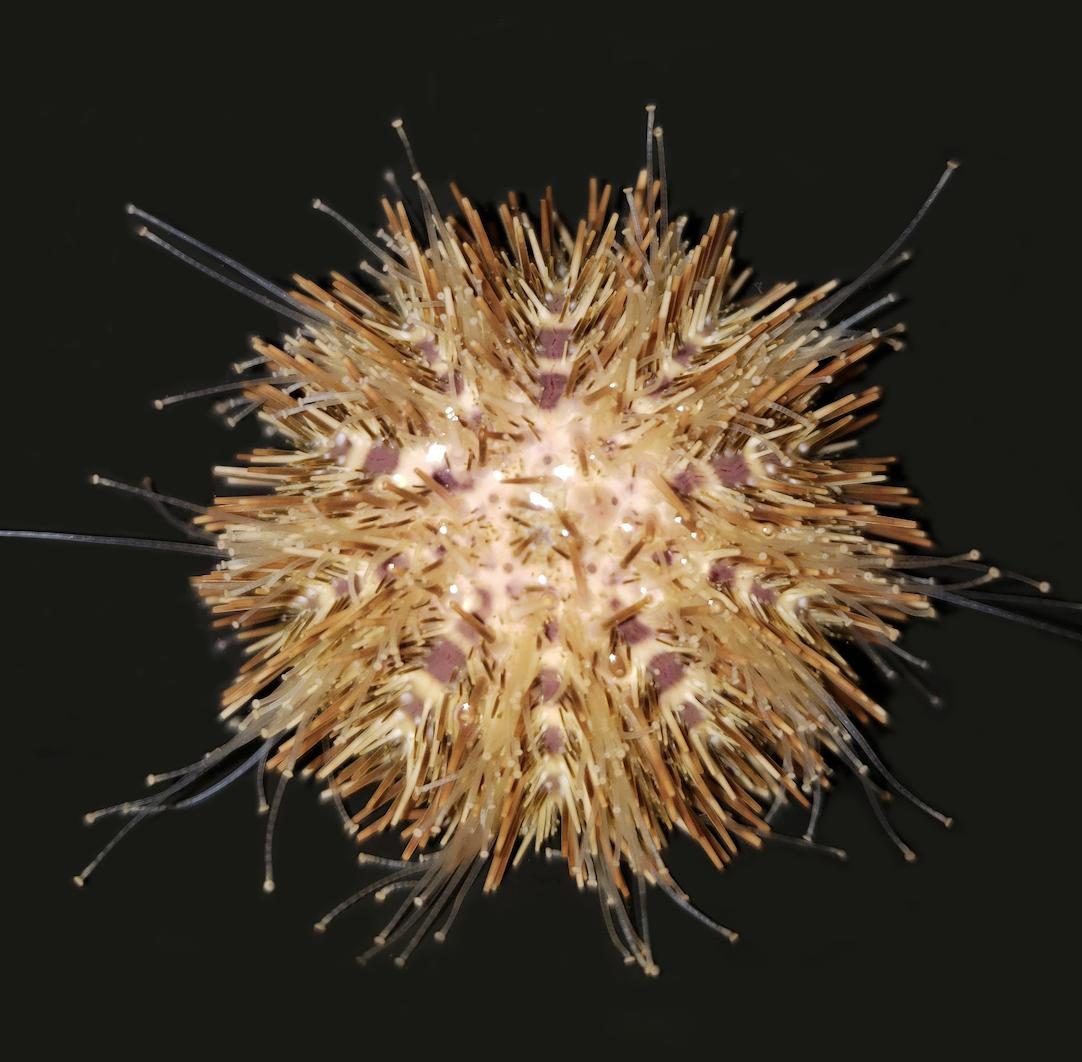
Scientists Discover Clam Living Inside a Sea Urchin's ThroatMost clams live buried in sand, attached to rocks or resting on the ocean floor. But scientists have discovered a species with a much stranger home: inside the throat of a deep-sea sea urchin. The newly described species, named Vaticinaria gulicola, was found off southern Australia in the Great Australian Bight, at depths of approximately 4,000 to 5,000 metres. It lives inside the oesophagus of an unusual deep-sea sea urchin called Carnarechinus clypeatus. The discovery came from a large survey of deep-sea animals. Researchers initially found small clams that appeared to have attachment threads but no obvious host. Further investigation revealed that some were living inside slippery tubular tissue belonging to the sea urchin’s digestive system. Even more surprising, the relationship had been noticed in older specimens decades ago, but the identity of the clam had remained unclear. Researchers also found a related clam in a sea urchin specimen collected during the historic Challenger Expedition of 1872 to 1876. The new species is only the second known genus in its broader group documented living inside another animal rather than attaching to its exterior. Scientists still do not know exactly how it survives in this unusual location or what it eats. One possibility is that it feeds on nutrient-rich material passing through the sea urchin’s digestive system, but that remains unconfirmed.

Home & DIYFindBlackoutcurtaindubaioffical11140m ago
Want to upgrade your home or office?# Wallpaper Fixing Dubai – Give Your Walls a Beautiful New Look Want to upgrade your home or office interiors? Professional wallpaper fixing in Dubai is a great way to add elegance, style, and personality to any space. From modern and luxury wallpaper designs to classic patterns and textured finishes, professionally installed wallpaper can transform ordinary walls into beautiful interior features. **Our Wallpaper Fixing Services Include:** • Residential wallpaper installation • Office and commercial wallpaper fixing • Luxury and designer wallpaper installation • 3D and textured wallpaper fixing • Old wallpaper removal and replacement • Smooth, clean, and precise finishing **Why Choose Professional Wallpaper Fixing?** Get attractive wall designs, quality installation, and a flawless finish that complements your interior décor. Transform your walls with professional wallpaper fixing services in Dubai. Contact us today! #WallpaperFixingDubai #WallpaperDubai #WallpaperInstallation #WallDecor #LuxuryWallpaper #InteriorDesignDubai #HomeDecoration