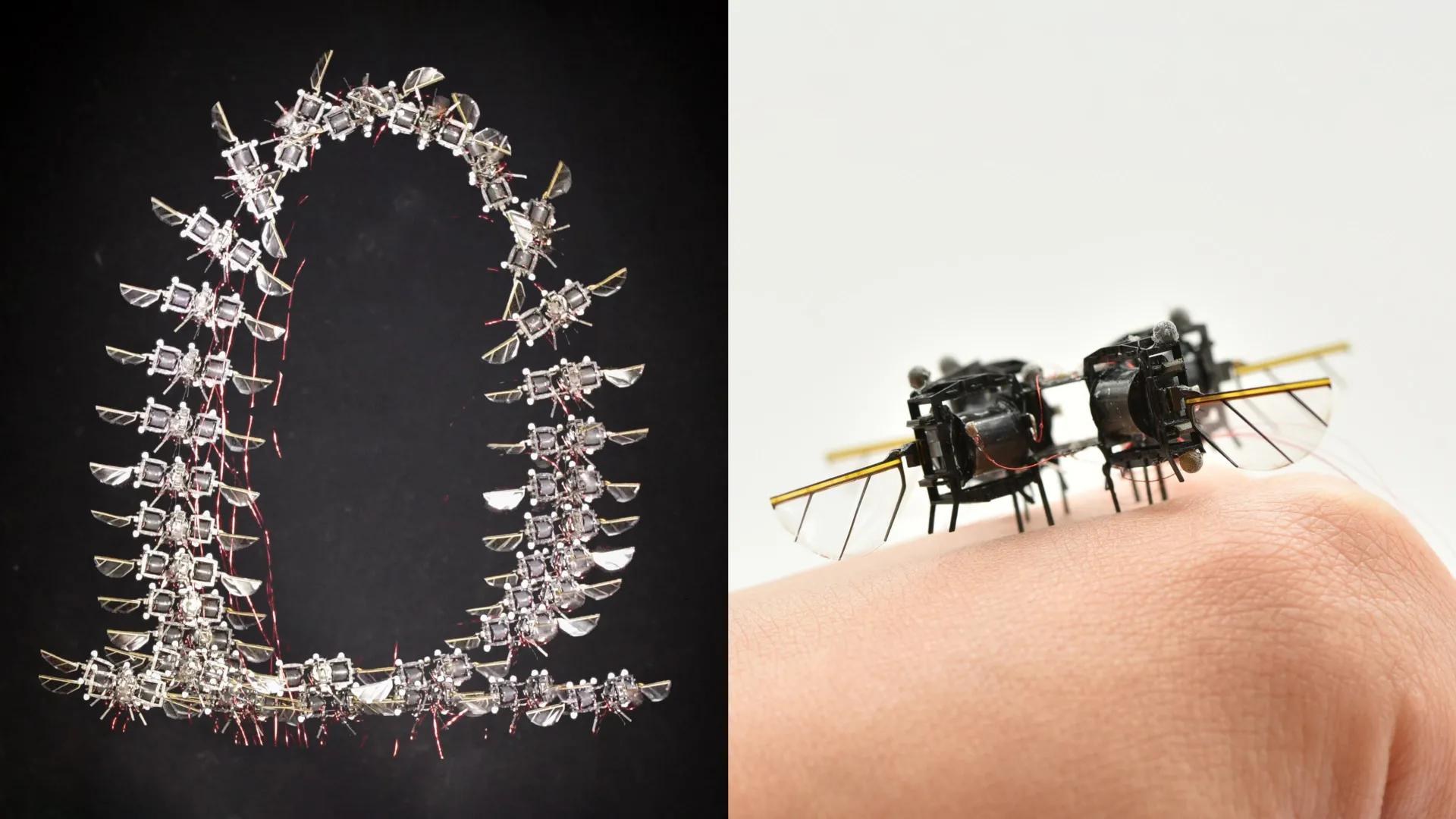


A robot smaller than a paperclip is bringing scientists closer to creating flying machines that can navigate the world like insects.
Researchers at the Massachusetts Institute of Technology have developed a featherweight flying robot equipped with its own sensors and onboard computing system.
Previous versions of these tiny machines depended on external motion-capture equipment to understand where they were flying.
The new design can estimate its own position and orientation, allowing it to follow flight paths and land accurately without relying on that laboratory tracking system.
One particularly interesting demonstration involved guiding the robot toward a sunflower and carefully landing on it. This could eventually inspire tiny robotic devices capable of navigating through crops, monitoring plant health and even helping with artificial pollination.
The technology is not ready to replace bees or operate independently outdoors just yet. The current prototype still relies on an external power source, and researchers are working toward adding a camera and onboard battery.
However, it represents an important step toward machines that can fly through tight spaces while carrying their own electronic brains.