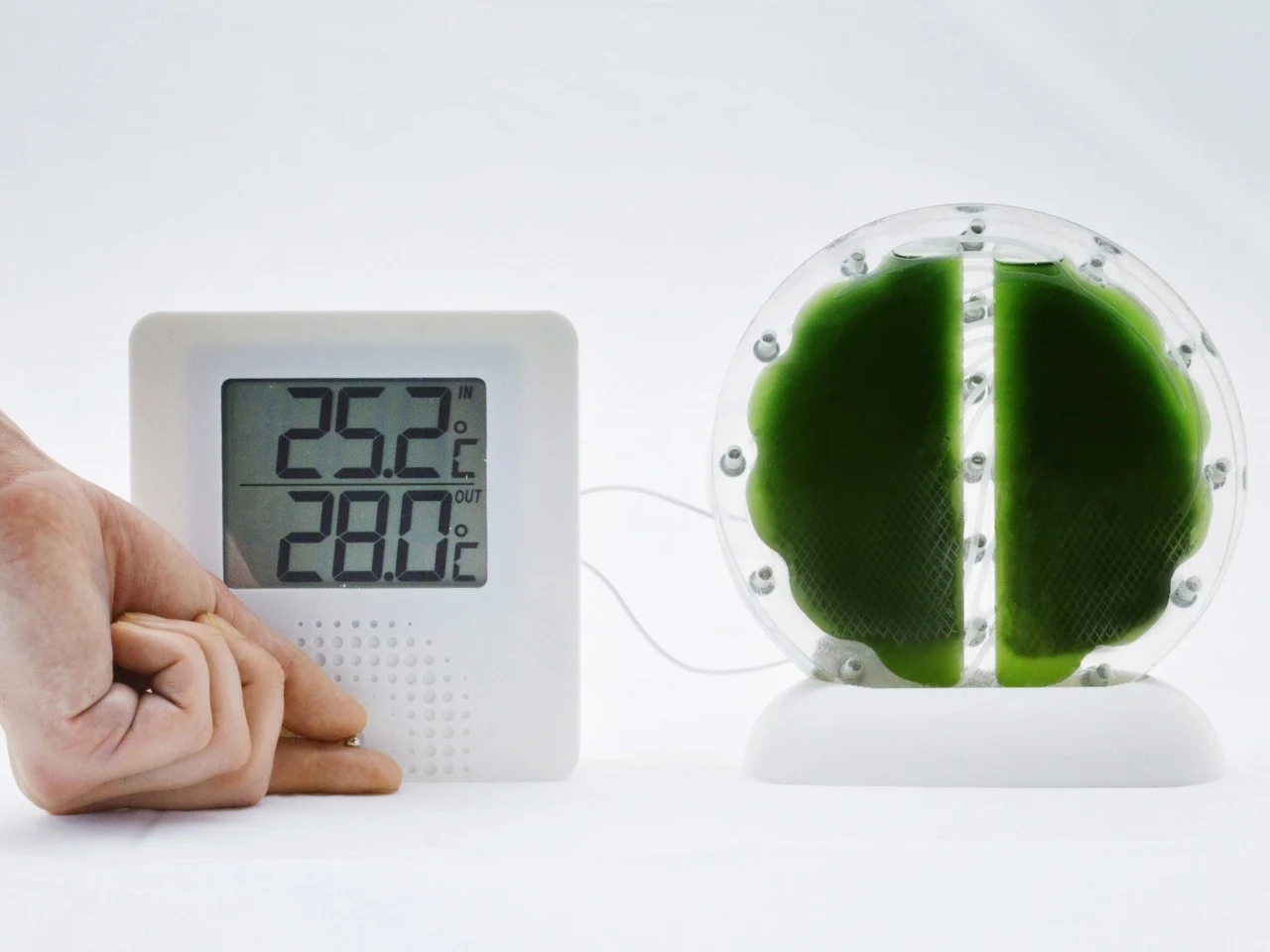


Algae might power your next device, without the lithium.
A prototype algae-powered battery, or biocell, shows a living alternative to traditional batteries. Designed by Lucia Giron and researchers at the University of Cambridge, it uses cyanobacteria to generate electricity through photosynthesis.
These biocells can work even in the dark and run on carbon dioxide and sunlight.
Unlike lithium-based batteries, which require mining and create waste, biocells offer a sustainable option. The research team has already created working models like a clock radio and a plant sensor, all powered by algae. These prototypes show how everyday devices might run on living energy in the future.
The biocells are not just a scientific experiment. The team has started a company, e-Pho, and developed a classroom toolkit to teach students how to build their own. This approach aims to familiarize new generations with energy sources that come from living organisms, not mined materials.
While the technology isn’t yet ready to power phones or laptops, it represents a shift in how energy can be generated. The biocells point to a future where small, low-energy devices run on something that breathes, grows, and renews itself, without harming the planet.