




AN EMERGENCY IS NOT THE TIME TO START PREPARING.
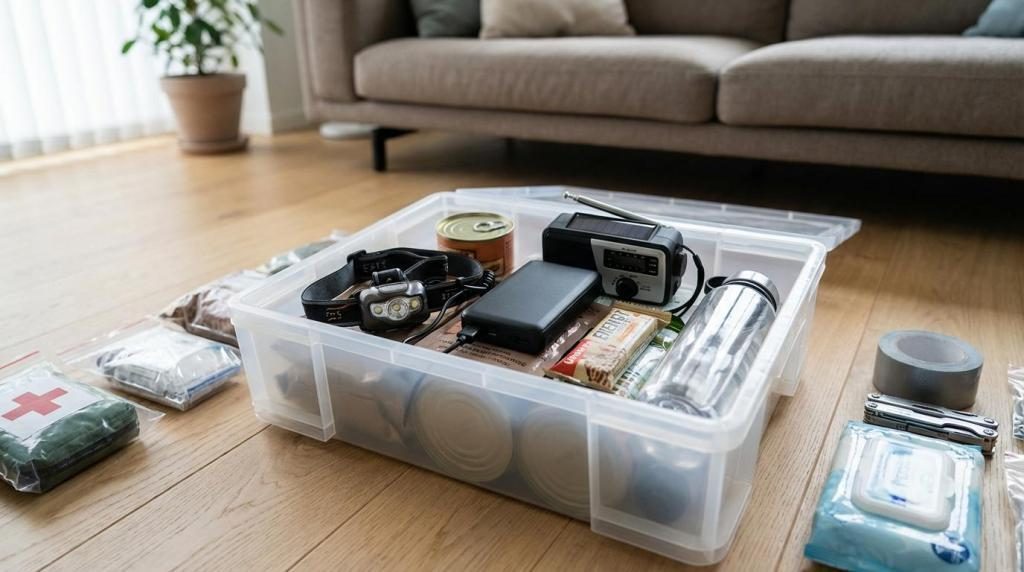
Power outages, severe weather, flooding and unexpected evacuations can happen without much warning. Having essential supplies in one accessible place can save valuable time when you need to act quickly.
You do not need to purchase everything at once. Start with a sturdy storage bin or backpack and gradually build a kit that meets your household's needs.
WHAT YOU'LL NEED
- One large, sturdy plastic storage bin or backpack
- Drinking water for each household member
- Non-perishable food
- Manual can opener
- Flashlight or headlamp
- Spare batteries
- Fully charged power bank and charging cables
- Battery-powered or hand-crank radio
- First-aid kit
- Essential medications
- Hand sanitizer and hygiene supplies
- Whistle
- Copies of important documents
- Small amount of emergency cash
- Extra clothes and a light blanket
- Supplies for children, older adults and pets, if applicable
STEP-BY-STEP INSTRUCTIONS
- Choose your emergency container
Select a container that is easy to carry and large enough for your essential supplies. A waterproof backpack or plastic storage bin with a secure lid works well.
For easier access, consider keeping a portable evacuation bag separate from your larger household supply box.
- Prepare drinking water
Store enough safe drinking water for everyone in your household. A common emergency-planning guideline is approximately 3.8 liters per person per day for at least three days.
For example, a household of three would need approximately 34 liters for three days.
Adjust your supply for your climate, medical needs, pets and local emergency recommendations. Use sealed commercial water or properly stored potable water.
- Add non-perishable food
Choose food that can last without refrigeration and requires little or no preparation.
Good options include:
- Canned fish and meat
- Crackers and biscuits
- Peanut butter
- Ready-to-eat meals
- Dried fruit and nuts
- Energy bars
Include a manual can opener if you pack canned food. Check expiration dates and rotate supplies regularly.
- Organize your lighting and communication supplies
Place a flashlight or headlamp, spare batteries, a charged power bank and charging cables inside a waterproof pouch.
A battery-powered or hand-crank radio can help you receive important updates when internet access or mobile networks are unavailable.
Keep devices charged and check batteries periodically.
- Prepare a first-aid and personal care pouch
Use a separate waterproof pouch for basic first-aid supplies, personal hygiene products and essential medications.
Include items that your household regularly needs, such as prescription medicines, glasses, sanitary products, baby supplies or medical equipment.
Keep medications in their original packaging whenever possible. Follow their storage requirements and replace expired supplies.
- Protect important documents
Place copies of identification documents, insurance information, emergency contacts and important household records in a waterproof document pouch.
You can also keep secure digital copies that are accessible offline. Avoid placing passwords or sensitive financial information in an unsecured folder.
- Pack clothing and personal essentials
Add a change of clothes, comfortable footwear, a lightweight blanket, rain protection and basic toiletries.
Customize this section based on your local climate. Include extra supplies for infants, older adults, people with disabilities and pets.
- Arrange everything by category
Use smaller pouches or transparent bags to separate food, medical supplies, electronics and personal essentials.
Place frequently needed items near the top. Label each section clearly so household members can find supplies quickly.
- Choose an accessible storage location
Keep your emergency kit somewhere easy to reach, away from excessive heat, moisture and direct sunlight.
Make sure everyone in the household knows where it is stored and how to access it.
- Review the kit regularly
Set a reminder to inspect your kit every six months. Check food and water dates, replace expired supplies, recharge power banks and test flashlights.
Update the contents whenever your household needs change.
EXTRA TIP
Prepare a smaller emergency pouch for your workplace or vehicle. Include drinking water, snacks, basic first aid, a flashlight, a power bank and essential personal items.
You may not always be at home when an emergency happens.
What is the one emergency supply you would never leave out?
Save this guide and start building your kit one item at a time.