Carbon Cell: A Breath of Fresh Packaging

A carbon-negative foam made from farm scraps could replace polystyrene.
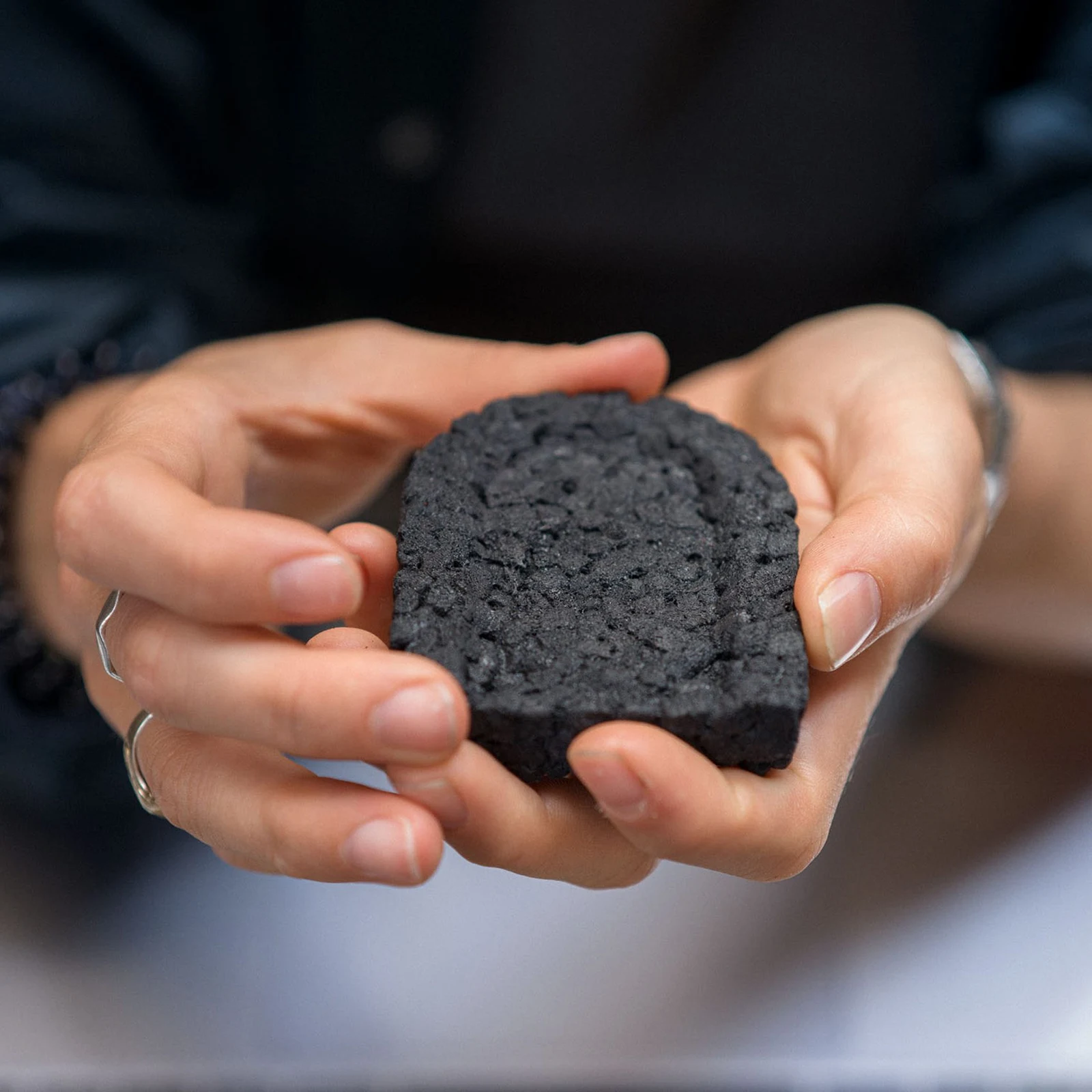
Carbon Cell is a foam product made from agricultural waste that serves as a compostable and carbon-negative alternative to polystyrene. It looks similar to expanded polystyrene but is black in color and made from biochar, a byproduct of heating biomass through pyrolysis.
The foam is lightweight, insulative, and protective, and can be molded into different shapes using the same equipment as polystyrene. It is made by mixing biochar with bio-based polymers and heating the mixture to create a foam cell structure.
Unlike traditional polystyrene, Carbon Cell captures carbon during production and continues to store it even after it is composted. For every kilogram of Carbon Cell produced, nearly a kilogram of carbon dioxide is removed from the atmosphere.
Developed by a team from Imperial College of London and Royal College of Art, Carbon Cell is being positioned as a sustainable solution for industries that heavily use polystyrene, such as construction and packaging.
The company plans to begin production in December and aims to scale quickly to reduce reliance on polystyrene.
Send to a friend
Make someone's day with a card made from this find.