






A fish lost for a century is returning to Michigan waters, thanks to tribal efforts.
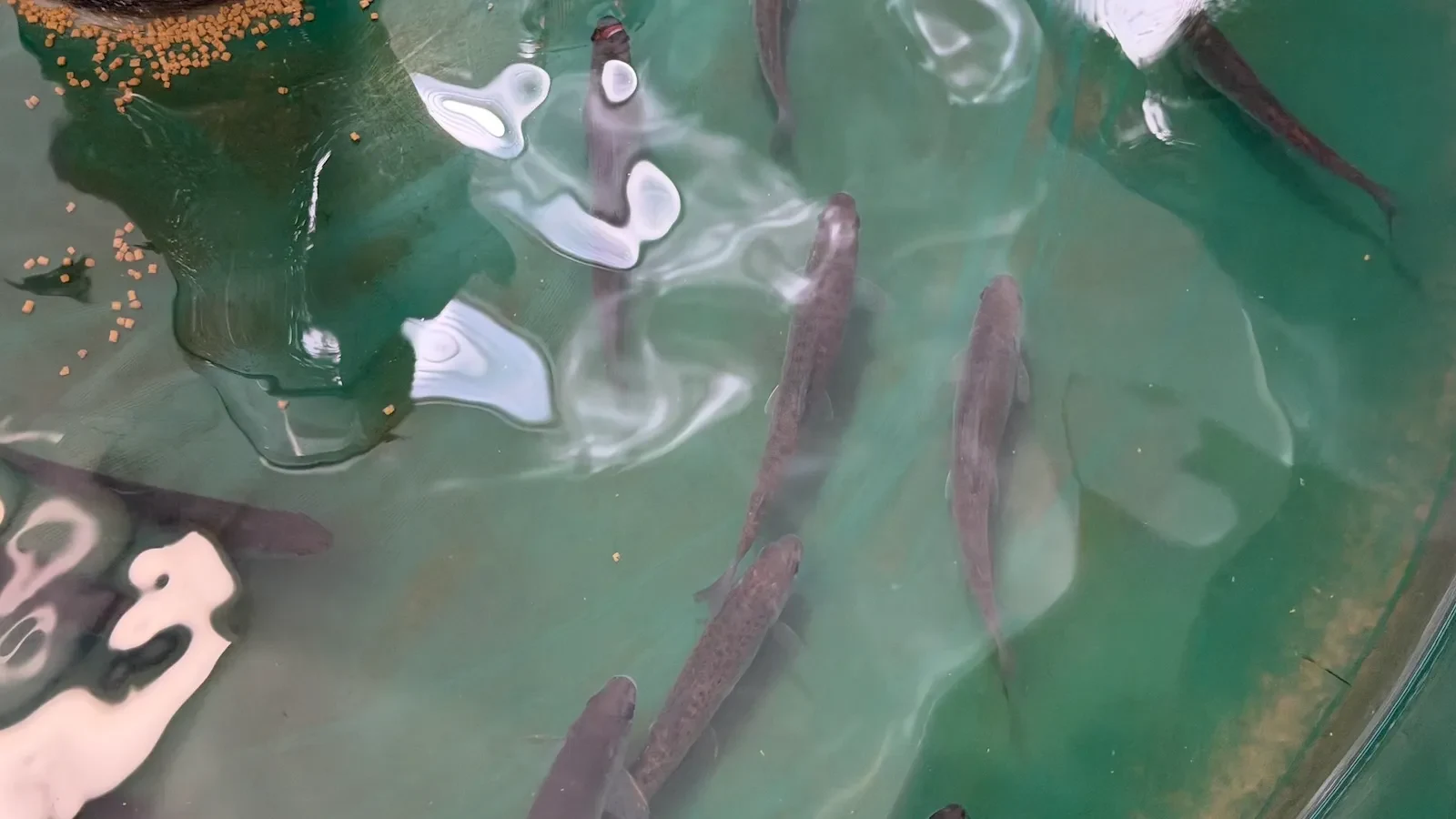
The Arctic grayling, a fish absent from Michigan for nearly 100 years, is being reintroduced through the work of three northern Michigan tribes. On a September morning, biologist Sean Leask counted and measured hundreds of these fish at a rearing facility near Traverse City.
The grayling, known for their iridescent colors even as young, were raised by the Grand Traverse Band of Ottawa and Chippewa Indians.
Industrial activity in the 1930s led to the decline of the Arctic grayling in Michigan. Now, the Grand Traverse Band, along with the Little River Band of Ottawa Indians and the Little Traverse Bay Bands of Odawa Indians, are working to restore the species.
The fish eggs came from Alaska’s Chena River, a source with more genetic diversity than the only other population in the Lower 48, in Montana’s Big Hole River.
So far, none of the released grayling have been seen in the wild. Floods and a small initial population have made tracking difficult. Despite this, the tribes remain hopeful. Biologists estimate it may take six to eight years to know if the reintroduction is successful.
The Grand Traverse Band raised 8,000 young grayling in 2025, a fourfold increase from the previous year.