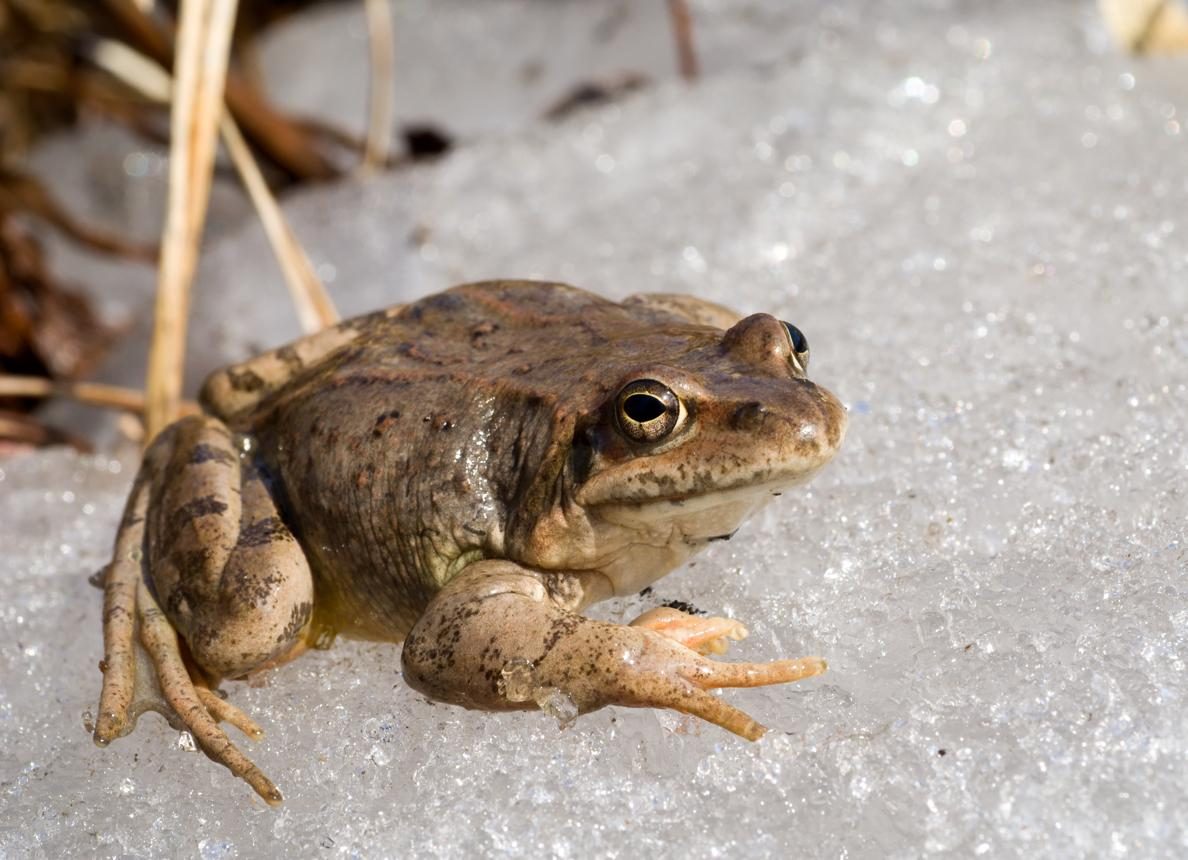



Imagine an animal spending part of winter frozen solid, then becoming active again when the weather warms up.
That's exactly what the wood frog can do!
Found in parts of North America, including Alaska and Canada, this remarkable amphibian has developed a special way to survive extremely cold winters.
When temperatures drop, ice forms in parts of its body. Its heart stops beating, breathing stops, and it becomes completely inactive.
But here's the secret: its liver releases large amounts of glucose into its tissues. This acts as a natural cryoprotectant, helping protect cells from damage caused by freezing.
When temperatures rise, the frog gradually thaws. Its heart starts beating again, and it can return to normal activity.
Some Alaskan wood frogs have even been documented surviving frozen conditions for months.
It's one of the most extraordinary survival strategies in the animal kingdom!
SOURCE: Research published in the Journal of Experimental Biology and Physiological and Biochemical Zoology.
QUESTION: Did you know an animal could survive with its heart temporarily stopped?