

What if the biggest waterfall on Earth wasn't visible from land at all?
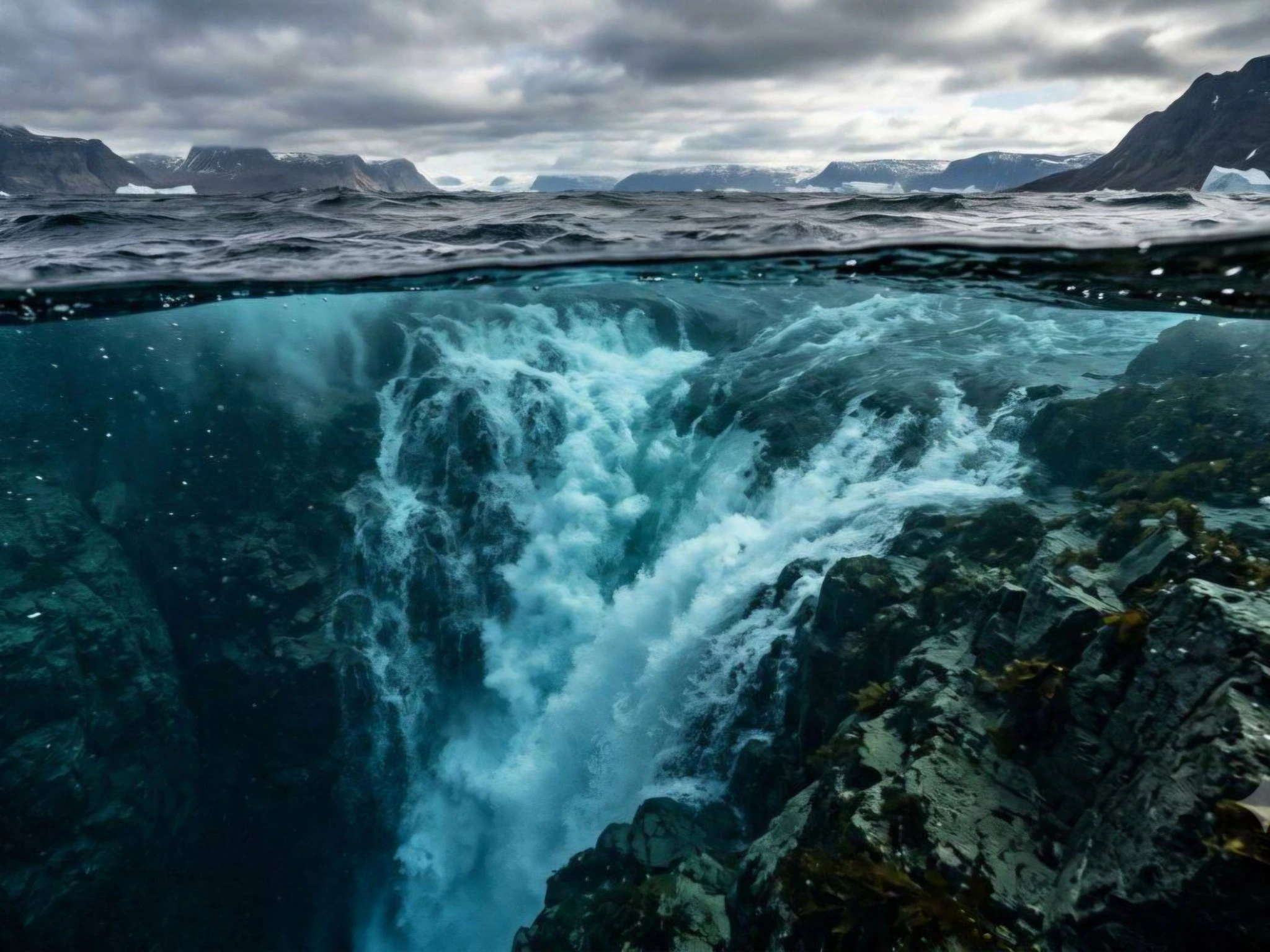
Hidden beneath the ocean between Greenland and Iceland is the Denmark Strait Cataract, an enormous underwater waterfall created by differences in water temperature and density.
Here's how it works: cold, dense water from the Nordic Seas flows beneath warmer, lighter water from the Irminger Sea. When the colder water reaches an underwater ridge in the Denmark Strait, it plunges down into the deeper ocean, creating a massive underwater cascade.
And the scale is almost impossible to imagine.
The underwater drop is approximately 3,500 metres (11,500 feet), making it taller than many of the world's most famous land-based waterfalls.
Scientists estimate that around 3.2 million cubic metres of water flow through this underwater cascade every second.
Unlike a traditional waterfall, you won't see water crashing down from a cliff. The entire phenomenon happens beneath the ocean's surface, driven by powerful underwater currents and differences in water density.
It's a reminder that some of Earth's most extraordinary natural wonders are hidden where we can't easily see them.
Did you know there was a waterfall beneath the ocean?