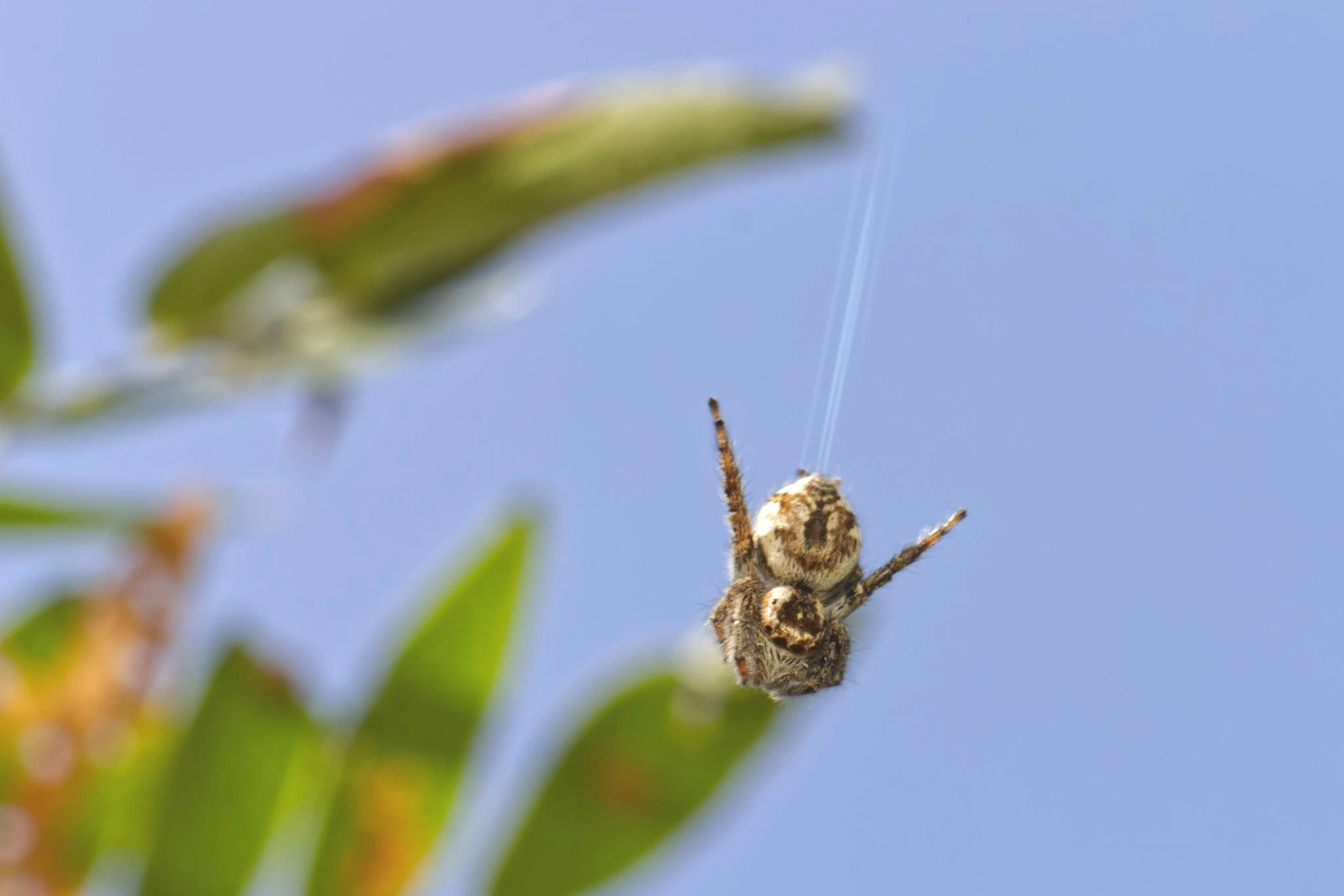


Spiders don't have wings, but some can travel enormous distances through the air using a technique called ballooning.
The process begins when a spider climbs to an exposed location, such as the tip of a plant or a branch. It then releases extremely fine strands of silk into the air.
Once the silk catches a suitable upward force, the spider can become airborne and travel away from its starting point.
For years, scientists primarily associated this behavior with wind and air currents. However, research has revealed another surprising factor: Earth's atmospheric electric fields.
In laboratory experiments, researchers from the University of Bristol found that spiders could take off inside a sealed chamber even when there were no air currents, provided an electric field was present.
The explanation involves electrostatic forces.
Spider silk can carry an electrical charge, and atmospheric electric fields can exert forces on these charged strands. The spider also has tiny sensory hairs called trichobothria that can detect electrical fields.
This means that spiders may use environmental electrical conditions as an additional source of lift.
Ballooning is especially important for young spiders because it helps them disperse from the place where they hatched, reducing competition and allowing them to colonize new habitats.
Some spiders have even been found far out at sea, demonstrating just how far these tiny travelers can go.