
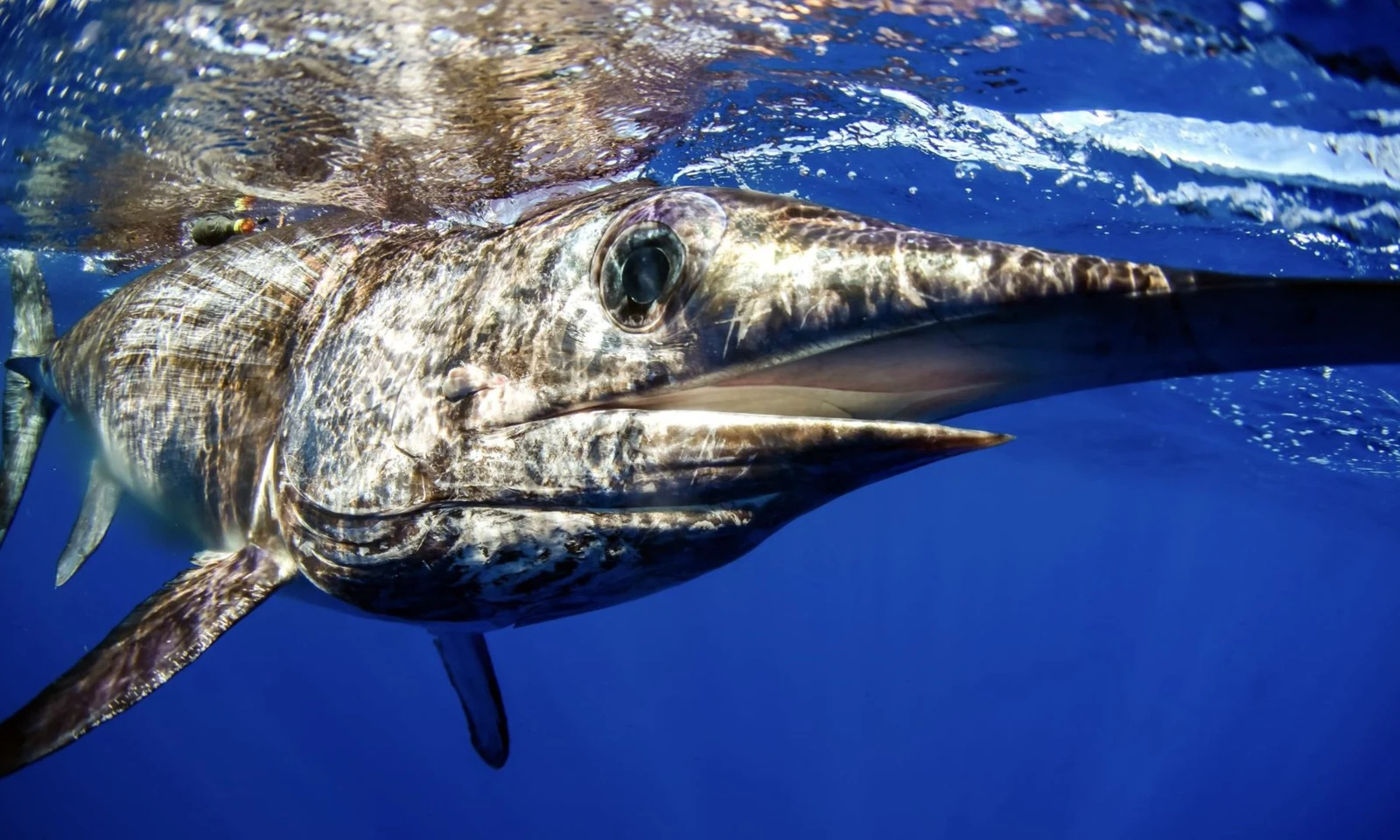

Swordfish plunge deeper than previously thought, hinting at hidden ocean secrets.
Satellite tags on 34 North Atlantic swordfish recorded rare dives past 3,280 feet, revealing behaviors that had not been well understood. These dives, which occurred near ocean eddies and fronts, suggest the fish might be exploring their surroundings, possibly for navigation.
Swordfish typically hunt in the ocean’s twilight zone, between 1,300 and 2,300 feet, following prey that migrate daily. But these deep dives, which reached up to 5,460 feet, were short and distinct, with the fish moving down faster than they ascended.
The dives often happened during the day and near areas of temperature variation.
The study, led by researchers at Woods Hole Oceanographic Institution, combined data from 34 tags placed between 2003 and 2024. The team ruled out feeding and predator escape as main reasons for the dives, instead suggesting the fish may be sampling the water column or sensing changes in ocean conditions.
Extreme dives were more likely where sea surface temperatures varied and where the surface stood higher, such as near the Gulf Stream. These features mark major ocean currents and shifting water masses, which might prompt swordfish to check what lies below.
Though the exact purpose of the dives remains unclear, understanding them could help track how swordfish respond to a changing ocean. The research highlights the deep mysteries of these fish and their role in the open sea.