

A drone hit 626 km/h to break a Guinness World Record.
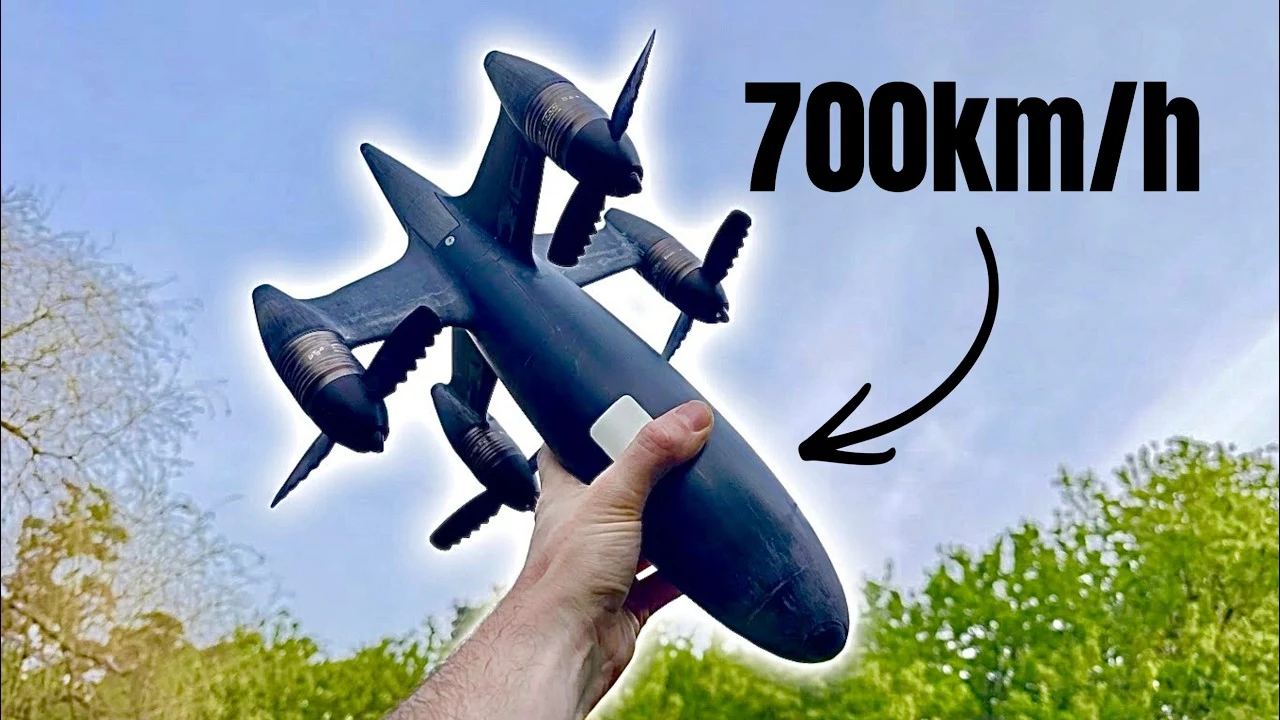
The Blackbird drone reached an average speed of 626 km/h, setting a new Guinness World Record. This achievement was the result of overcoming significant engineering challenges, including frame resonance and aerodynamic inefficiencies.
The team behind the project rethought traditional design principles and used advanced simulations to push the boundaries of drone performance.
Custom-built components like tailored propellers and advanced cooling systems were essential in achieving these record-breaking speeds. The team focused on optimizing thrust-to-weight ratios and minimizing electrical resistance.
Iterative testing helped refine the drone’s performance, leading to the final record-breaking run.
The Blackbird team started with simulations and small-scale models before building full-scale prototypes. Their goal was not only to break the 600 km/h barrier but to create a design that could be improved upon in the future. Achieving this required a complete rethinking of traditional drone engineering methods.
The breakthrough came after many test flights that provided data on aerodynamics, battery performance, and component efficiency. Small adjustments, like fine-tuning propeller angles, added up to a major improvement in speed.
The 626 km/h record was certified by Guinness World Records, marking a milestone in drone engineering.
The Blackbird’s success has inspired others in the field. Teams are already working on breaking the 700 km/h barrier. The innovations developed for this project could influence future applications in both commercial and aerospace engineering.