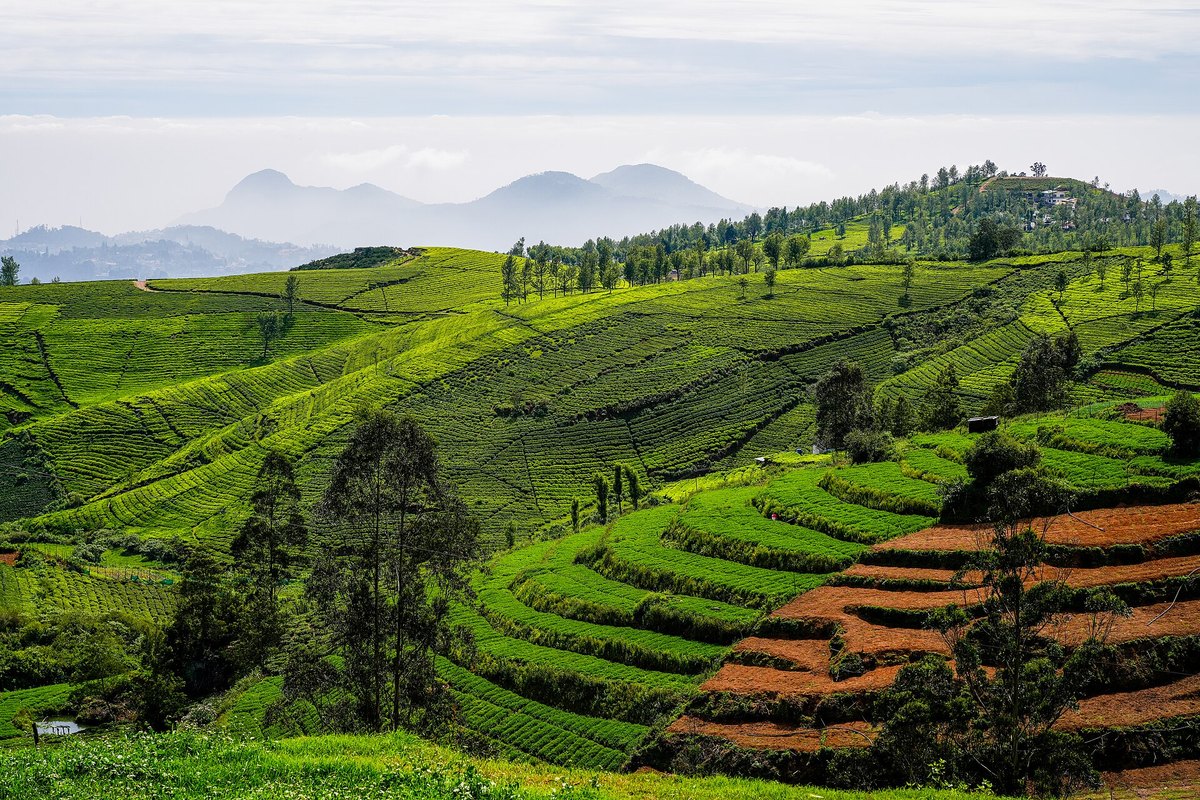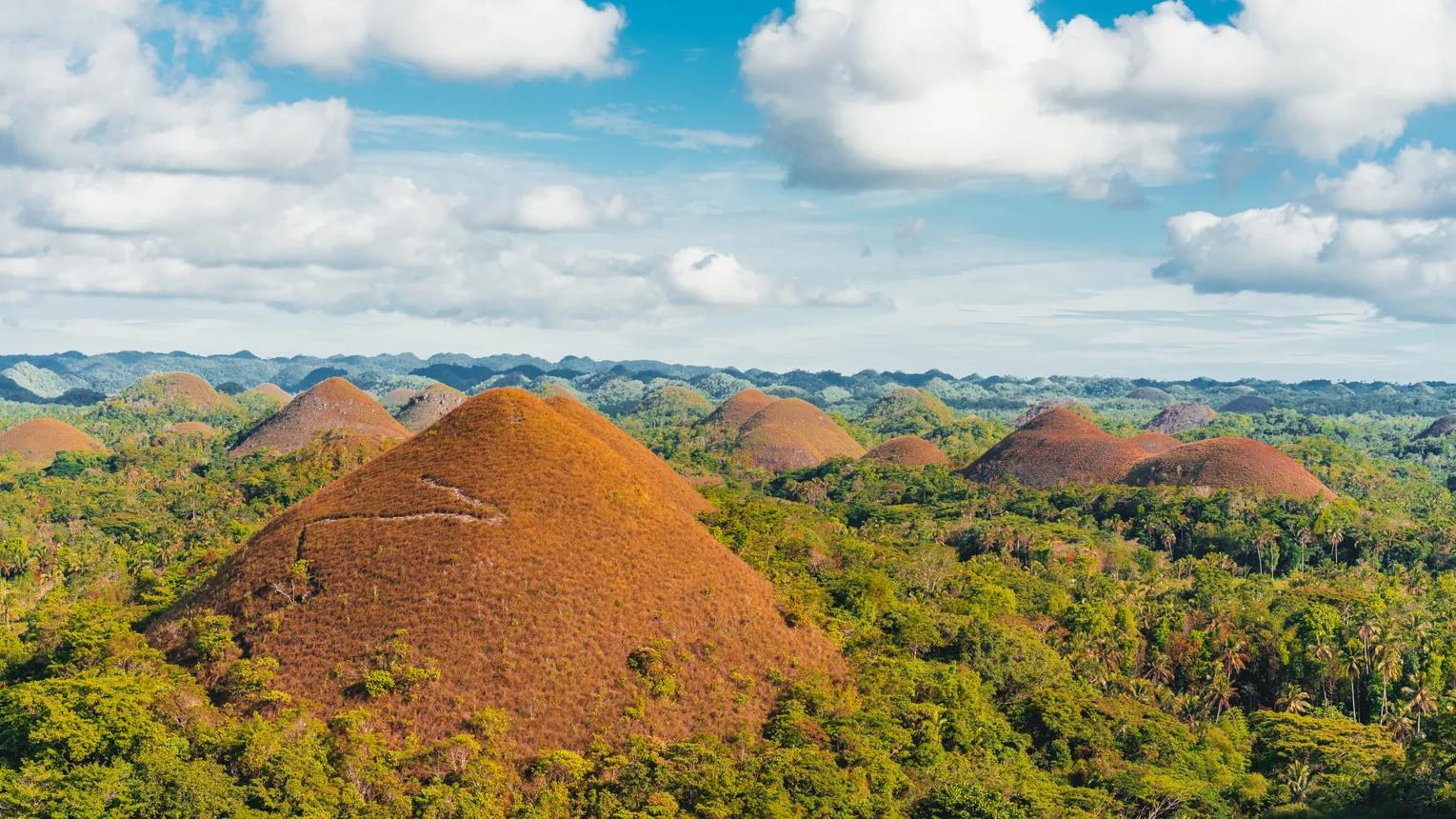









Imagine looking across an enormous landscape filled with hundreds of nearly identical hills. They rise from the surrounding green plains like giant chocolate drops scattered across the countryside.
This is the Chocolate Hills of Bohol, one of the Philippines’ most recognizable natural landmarks. The landscape consists of more than 1,200 cone-shaped hills spread across several municipalities, with some official sources documenting approximately 1,776 formations.
Despite their almost identical shapes, these hills were not created by humans. They are geological formations made primarily of limestone, originating from ancient marine deposits and coral materials.
Over millions of years, geological uplift raised these limestone deposits above sea level. Rainwater and natural erosion gradually dissolved and sculpted the rock, creating the rounded, cone-like shapes visible today.
Their most famous feature appears during the dry season, generally from December to May. The grass covering the hills dries out and turns brown, making the entire landscape look as though it is covered in chocolate.
During the rainy season, the hills become lush green again, creating a completely different but equally beautiful view.
One of the most popular places to see them is the Chocolate Hills Complex in Carmen. Visitors can climb to an observation deck and enjoy a panoramic view of the surrounding formations.
The area is also part of the Bohol Island UNESCO Global Geopark, recognized for its geological heritage and natural landscapes.
For travelers visiting Bohol, the Chocolate Hills can be combined with other attractions such as the Philippine Tarsier Sanctuary, Loboc River and local countryside destinations.
What makes this place special is that it is not just one unusual hill or mountain. It is an entire landscape filled with hundreds of naturally formed hills that create one of the most recognizable views in the Philippines.