

How living organisms create their own light
Imagine standing beside the ocean at night and watching the waves glow electric blue as they reach the shore. It might look like magic, but the light is produced by living organisms.
This phenomenon is called bioluminescence, and it occurs in many marine creatures, from microscopic plankton to deep-sea fish.
What exactly is bioluminescence?
Bioluminescence is the production and emission of light by a living organism through a chemical reaction.
In many organisms, the reaction involves a light-producing molecule called luciferin and an enzyme called luciferase. Oxygen is also involved in many forms of bioluminescence.
Unlike a light bulb, this biological light produces very little heat. Scientists often describe it as “cold light.”
Why do animals produce light?
Bioluminescence serves several important purposes:
- Protection: Some organisms release glowing material to confuse or distract predators.
- Attraction: Certain animals use light to attract prey or potential mates.
- Communication: Some species use flashes or patterns as signals.
- Camouflage: Certain deep-sea animals produce light that helps disguise their silhouettes from predators below.
Where can you see it?
Bioluminescent plankton sometimes create glowing coastal waters, particularly when large numbers are disturbed by waves, boats, or movement.
Some well-known places for seasonal glowing-water experiences include parts of Puerto Rico, the Maldives, and other tropical coastal regions. The displays are not guaranteed, because they depend on species, weather, water conditions, and plankton abundance.
The strangest example
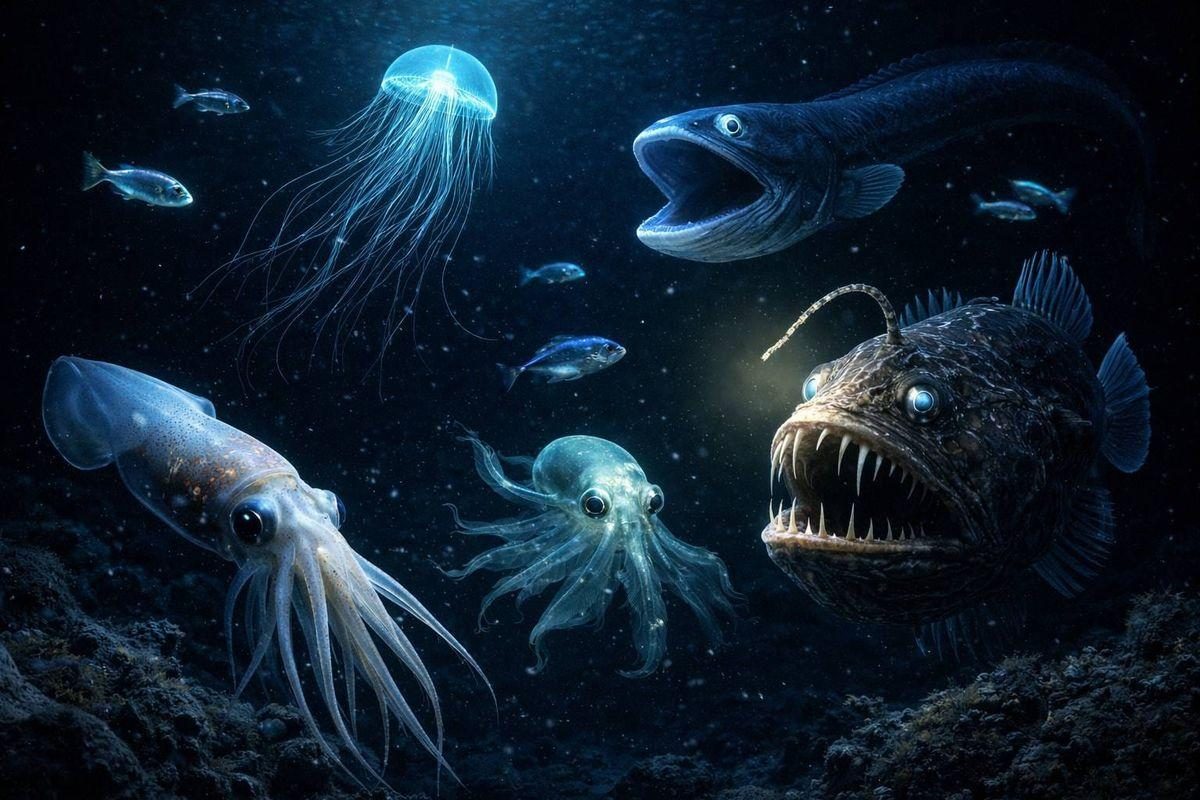
The anglerfish uses a glowing structure near its head to attract prey in the darkness of the deep ocean. Other deep-sea creatures have light-producing organs along their bodies.
Why it matters: Bioluminescence shows how life has evolved extraordinary ways to survive in environments where sunlight cannot reach.