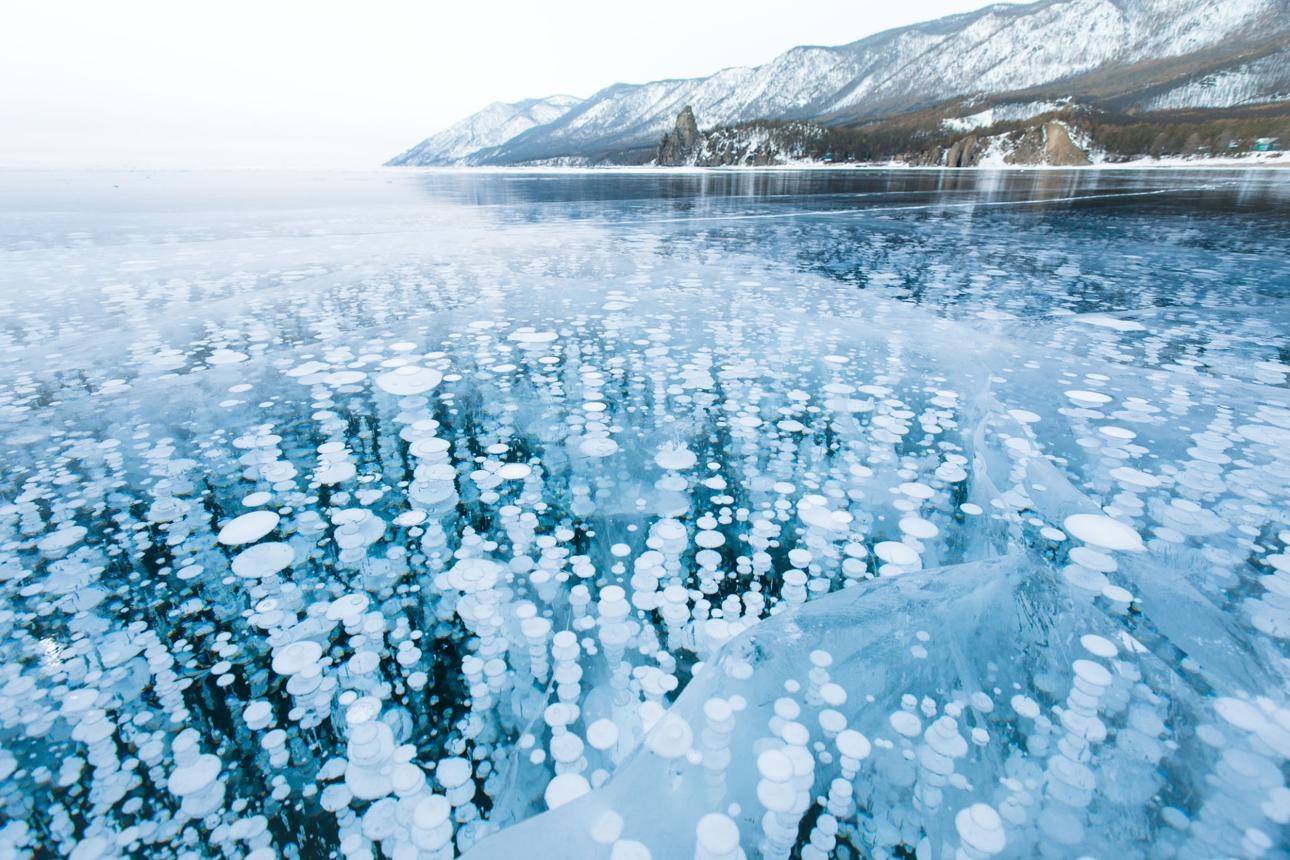

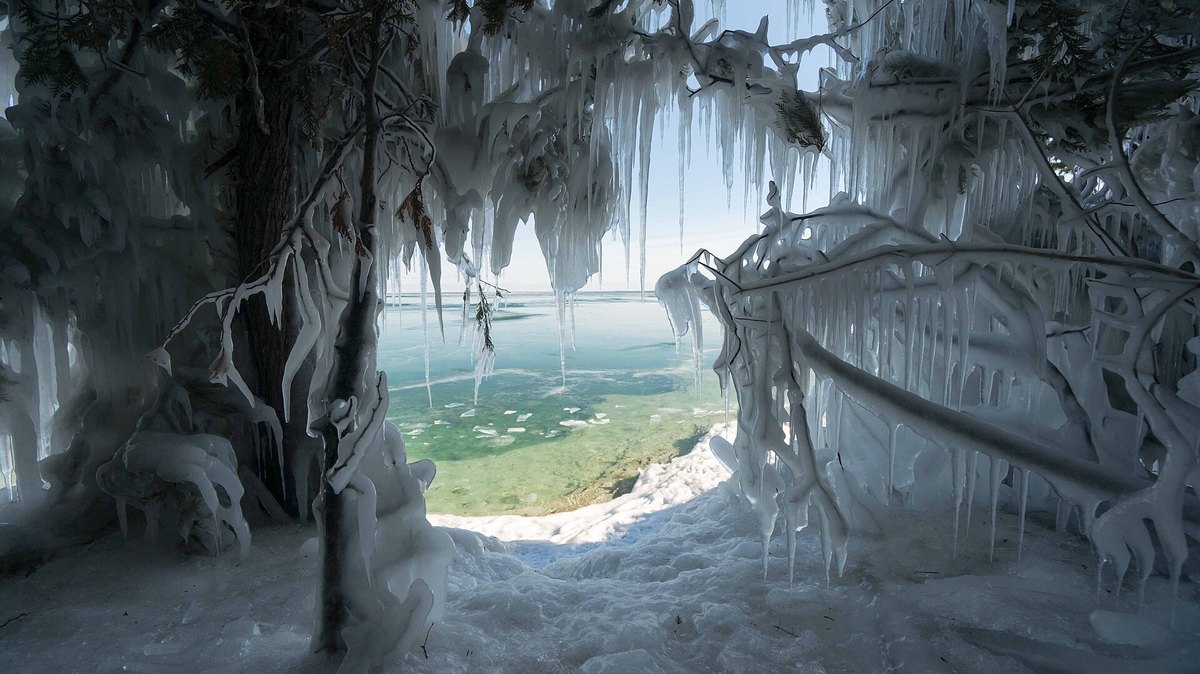
Imagine walking across a frozen lake where the ice is so clear that you can see deep beneath your feet. Huge air bubbles appear trapped inside the blue surface, while enormous ice caves and frozen cliffs create a landscape that looks almost otherworldly.
This is Lake Baikal, located in southeastern Siberia, Russia. It holds two extraordinary freshwater records: it is the world’s deepest lake, reaching approximately 1,642 meters, and it contains more freshwater by volume than any other lake on Earth.
The lake stretches approximately 636 kilometers in length and contains around 23,600 cubic kilometers of water. That is roughly 20% of the world’s unfrozen freshwater reserve.
Lake Baikal is also one of the oldest lakes on the planet, estimated to be around 25 million years old. It formed within a geological rift valley, where the Earth’s crust gradually pulled apart, creating an enormous basin that filled with water over millions of years.
Its incredible age and isolation have allowed unique wildlife to evolve. One of its most famous residents is the Baikal seal, also known as the nerpa. It is the only seal species that lives exclusively in freshwater.
The lake is also home to numerous endemic fish and tiny organisms that cannot naturally be found anywhere else.
But Lake Baikal’s most breathtaking appearance comes during winter. As temperatures fall, much of the lake freezes, creating vast stretches of transparent blue ice.
Air bubbles released from organic material beneath the surface become trapped in layers of freezing water, forming fascinating patterns that look like suspended beads.
In certain areas, wind and waves sculpt the frozen surface into towering ice formations, while water along the rocky shores creates beautiful natural ice caves filled with icicles.
During summer, the landscape transforms completely. The frozen surface becomes a vast blue lake surrounded by mountains, forests and small coastal settlements.
Lake Baikal is not just a destination for incredible photographs. It is a globally important freshwater ecosystem with remarkable biodiversity and geological history. UNESCO recognized it as a World Heritage Site in 1996.
It is one of those rare places where the same destination can look like a completely different world depending on the season.