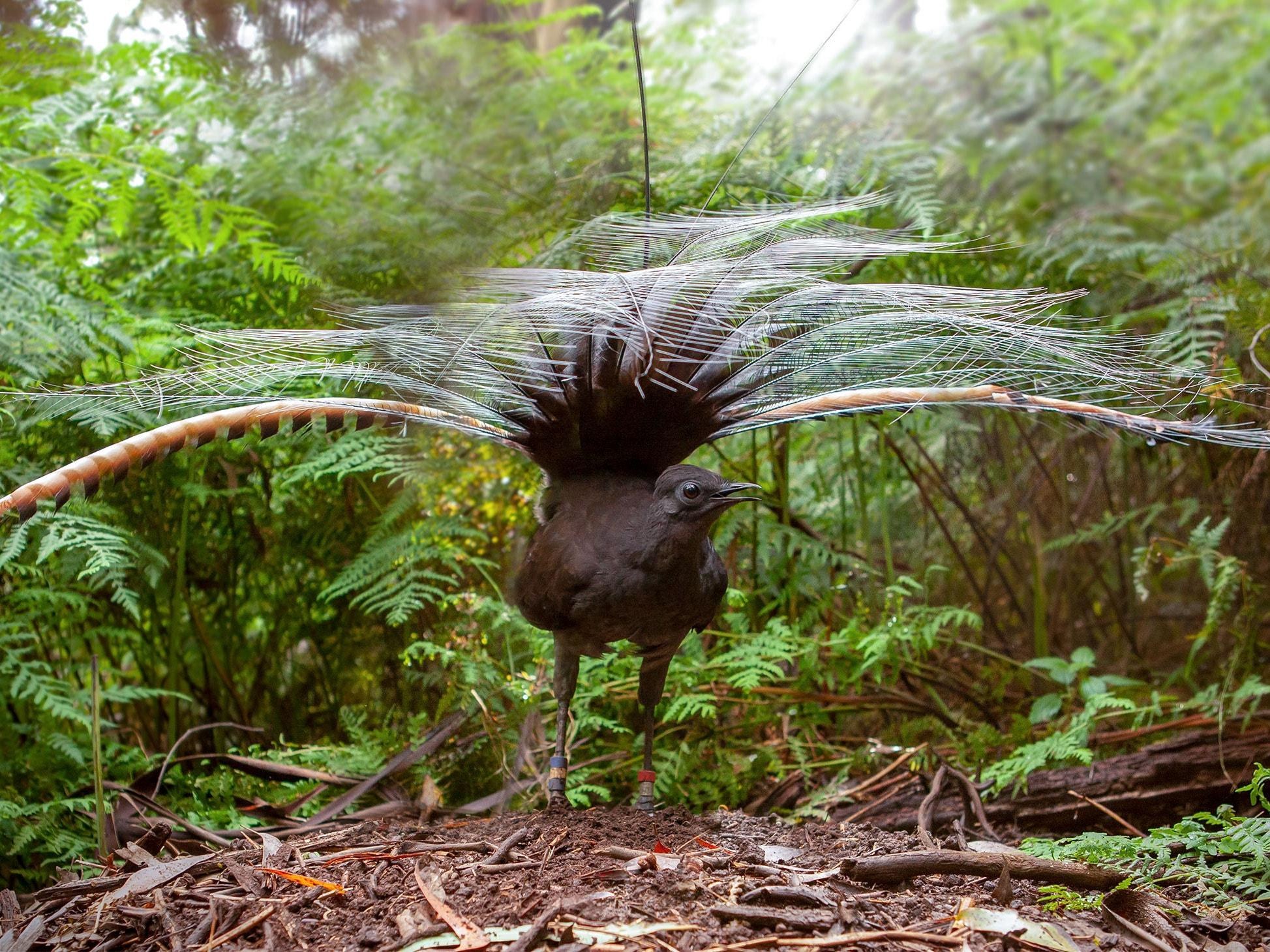




Imagine walking through an Australian forest and hearing a chainsaw, a car alarm, or even another bird calling nearby. You might be surprised to discover that the sound is coming from a bird sitting in a tree.
Meet the superb lyrebird (Menura novaehollandiae), one of nature's most extraordinary vocal mimics.
Native to southeastern Australia, this ground-dwelling bird is famous for its elaborate tail feathers and remarkable ability to reproduce sounds from its surroundings. Its repertoire includes other bird calls, animal noises, and even mechanical sounds such as chainsaws and car engines.
According to the Australian Museum, approximately 80% of the superb lyrebird's song can consist of mimicry.
But how does it do this?
The lyrebird has an exceptionally developed vocal organ called the syrinx. This allows it to produce a wide range of complex sounds. By listening carefully to its environment, it can incorporate familiar noises into its own vocal performances.
Male lyrebirds use their songs and elaborate tail displays during courtship. They can even combine several sounds into lengthy performances to attract females.
There is another interesting detail: each male has a territory and uses its vocal abilities as part of its communication and breeding behavior.