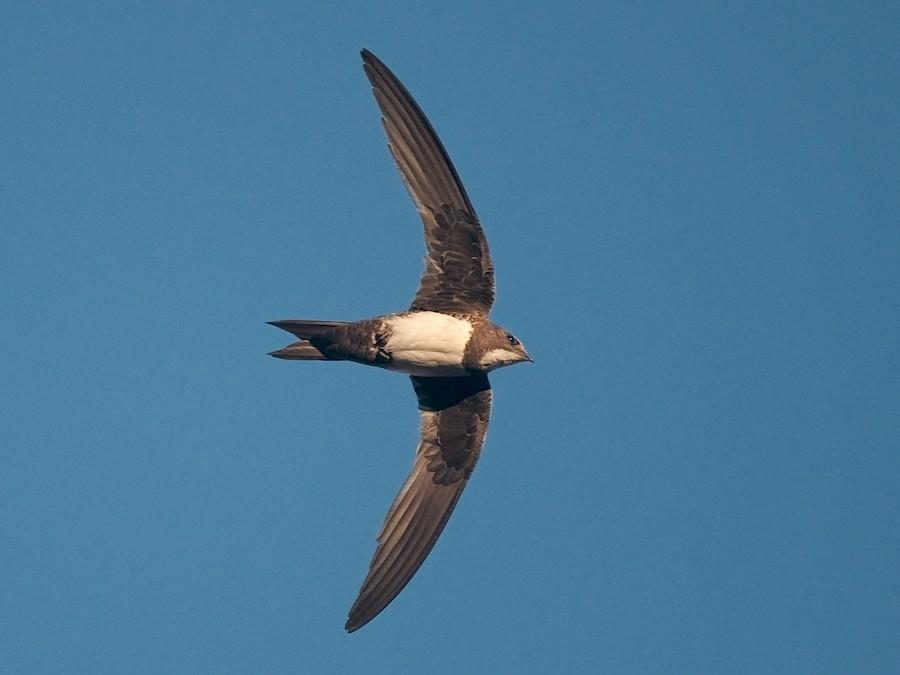











Imagine being in the air for almost seven months without properly landing.
For the Alpine swift (Tachymarptis melba), this is not just a fascinating possibility. Scientists have recorded evidence of this extraordinary behavior.
In a study published in Nature Communications in 2013, researchers attached small tracking devices to Alpine swifts to investigate their movements during migration.
The findings showed that three birds remained airborne for more than 200 days. Their tracking data indicated that they spent almost the entire period flying, with no substantial periods of landing.
So how do they survive?
Alpine swifts are highly adapted to life in the air. They have long, aerodynamic wings and spend much of their time catching flying insects. Their feeding, migration, and resting behaviors are all adapted around flight.
The research also suggested that essential physiological processes, including sleep, can continue while these birds are airborne. Scientists believe they may rest during flight, although the exact sleep mechanisms in Alpine swifts require further investigation.
This is particularly remarkable because flying continuously requires energy, coordination, and constant control of their movements.