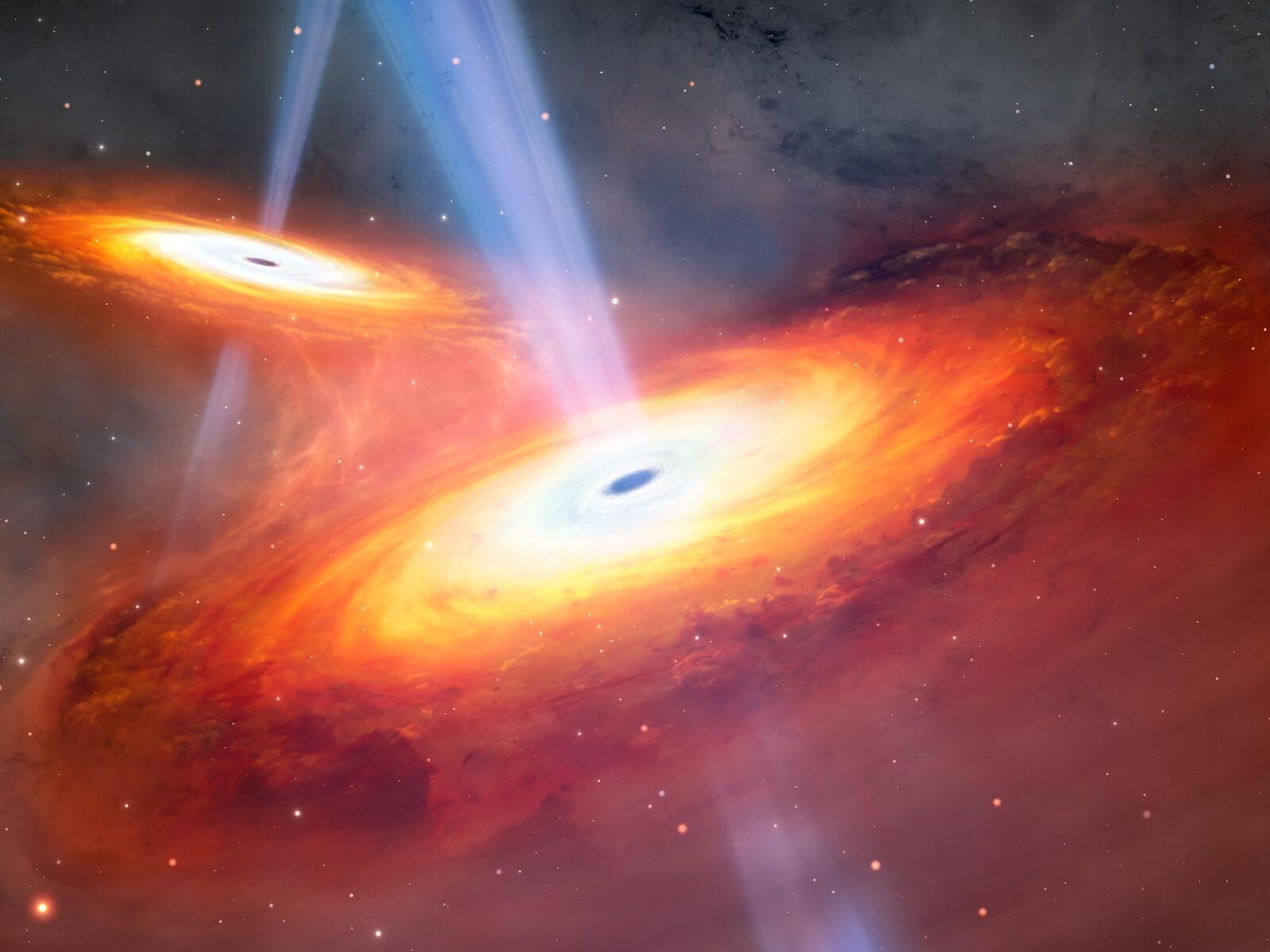











Astronomers have reported an unusual pair of extremely bright black holes that were already consuming gas less than one billion years after the Big Bang. The discovery offers another look at how massive black holes grew when the universe was still young.
Black holes are not directly visible, but material falling towards them can become extremely hot and release enormous amounts of light. This is why actively feeding black holes can appear as brilliant objects known as quasars.
Finding a rare pair so early in cosmic history raises questions about how these enormous objects formed and grew so quickly. Researchers are continuing to investigate what brought the pair together and how common such systems might have been in the early universe.
Would you try this?
Over to you!Love it? Say why.
No comments yet.Be the first.
Over to you!
Seen something just as good? Tell everyone.
Add it in the comments. Your find could be the next one people save.Loved this?
Save it to My BEST
Send it to a friend
Follow Black holes for more like this
Share your bestYour post could be the next one here.