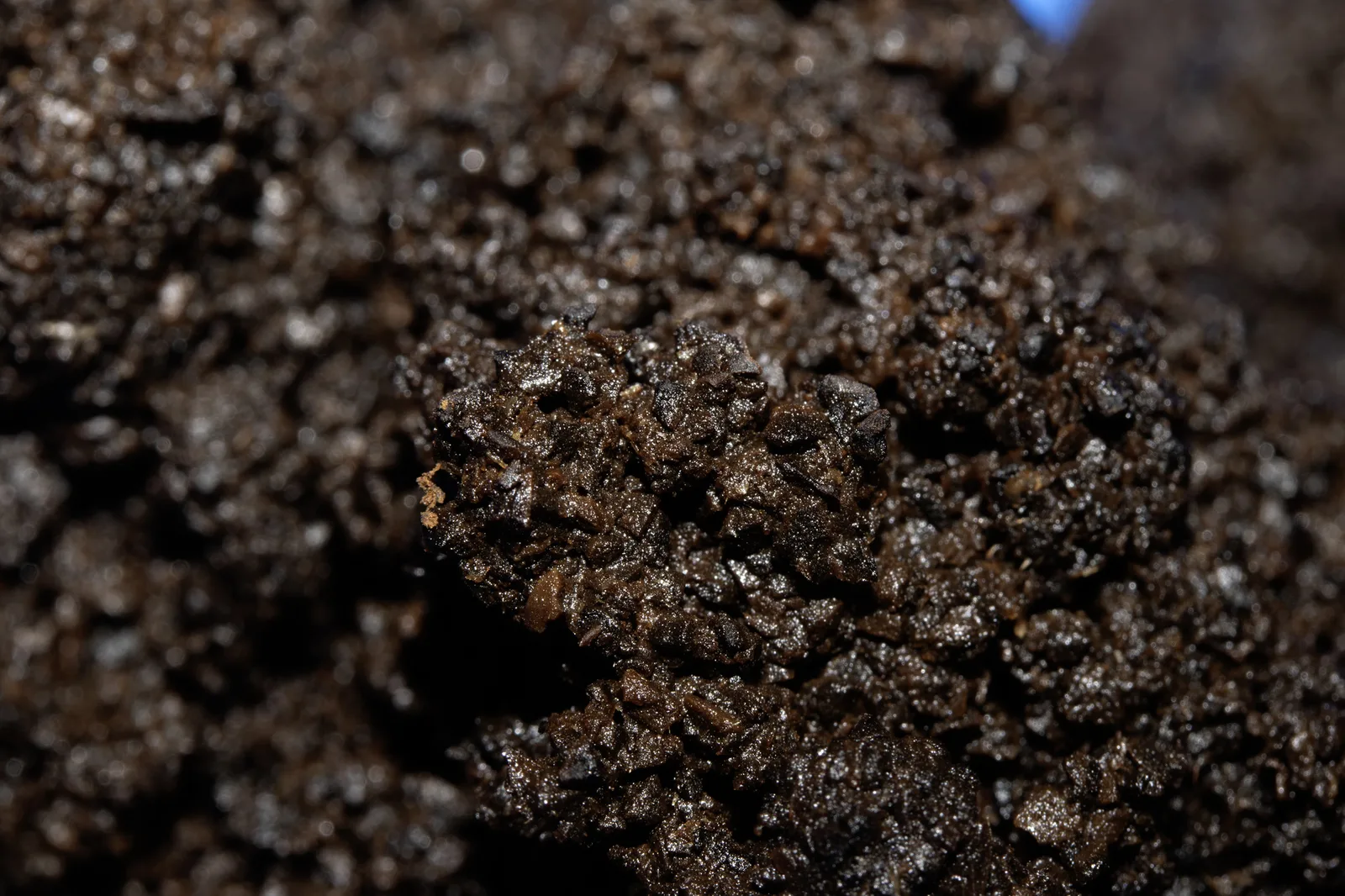

Coffee grounds become coal in less than two minutes.
A new process turns wet coffee grounds into coal-grade biochar in under 90 seconds. Researchers at the Korea Institute of Geoscience and Mineral Resources used plasma flames to achieve this, skipping the need to dry the grounds first.
Traditional methods struggle with the high moisture in coffee waste, often requiring extra drying steps. The Flame Plasma Pyrolysis system uses high heat, between 1,470 and 1,650°F, to vaporize water inside the grounds. This creates pressure that breaks open the structure, speeding up carbonization.
The resulting biochar has an energy value close to anthracite coal and removes sulfur, a pollutant in regular coal. It also has a high surface area, making it useful for filtration and adsorption. The process is much faster than other methods, taking only 90 seconds instead of hours.
The technique could apply to other wet organic waste like food scraps and sewage sludge. Lead researcher Dr. Taejun Park sees this as a way to turn waste into a valuable resource. The next step is testing the process at commercial scale with different materials.