

What if you could grow vegetables inside a building without using traditional farmland?
That’s the idea behind vertical farming.
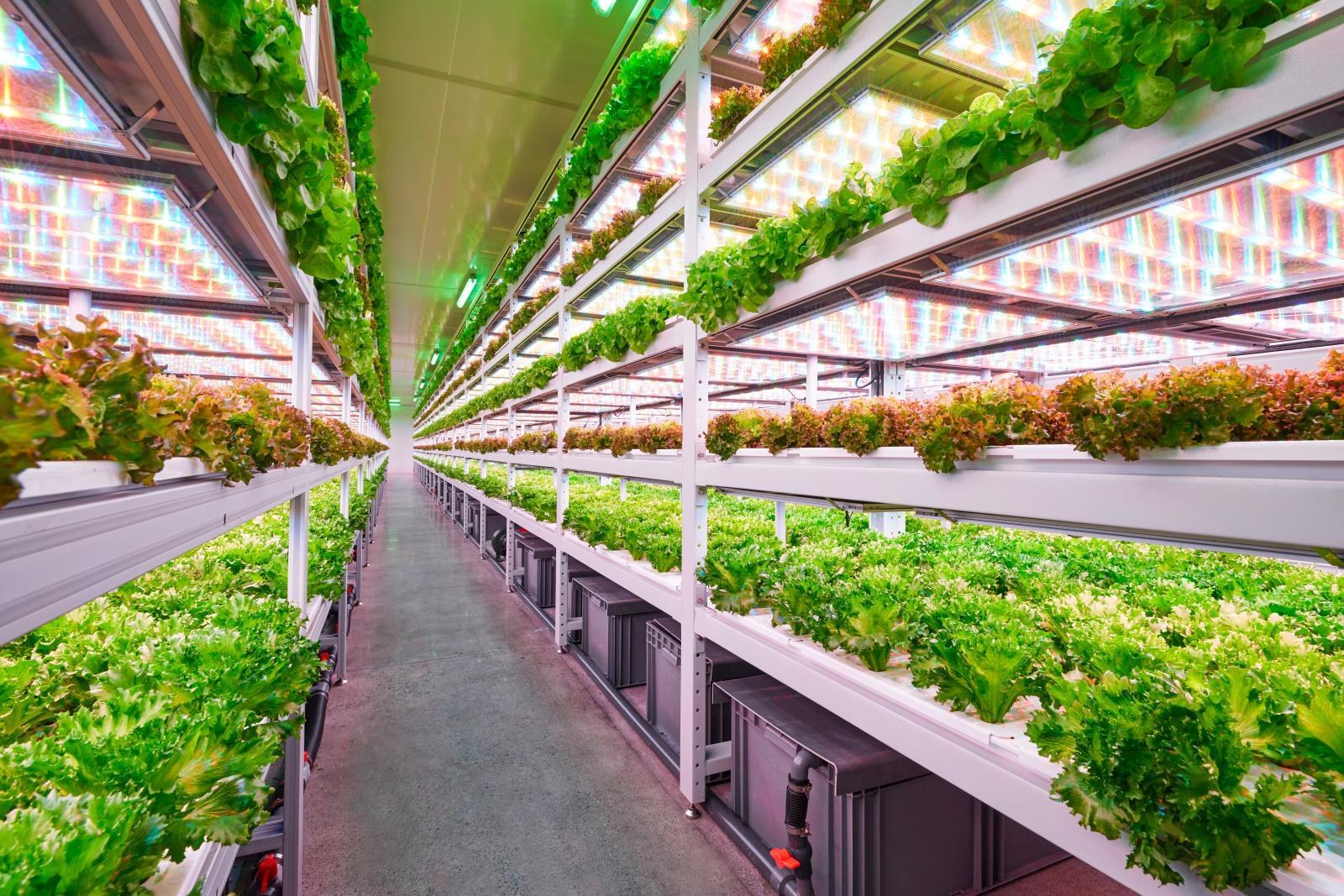
Instead of planting crops across large outdoor fields, vertical farms grow plants in stacked layers inside controlled environments. Many use hydroponics, a method where plant roots receive water containing dissolved nutrients rather than growing in ordinary soil.
Artificial lighting, temperature controls, and carefully managed water systems help create consistent growing conditions.
Leafy greens such as lettuce and herbs are particularly suitable for many indoor farming systems because they grow relatively quickly and can be cultivated in compact spaces.
However, vertical farming is not automatically cheaper or more sustainable than conventional agriculture. Electricity use, construction costs, crop selection, and energy sources all influence its environmental and financial performance.
Why it matters: It offers another possible way to produce fresh food closer to cities, especially where land or suitable growing conditions are limited.