
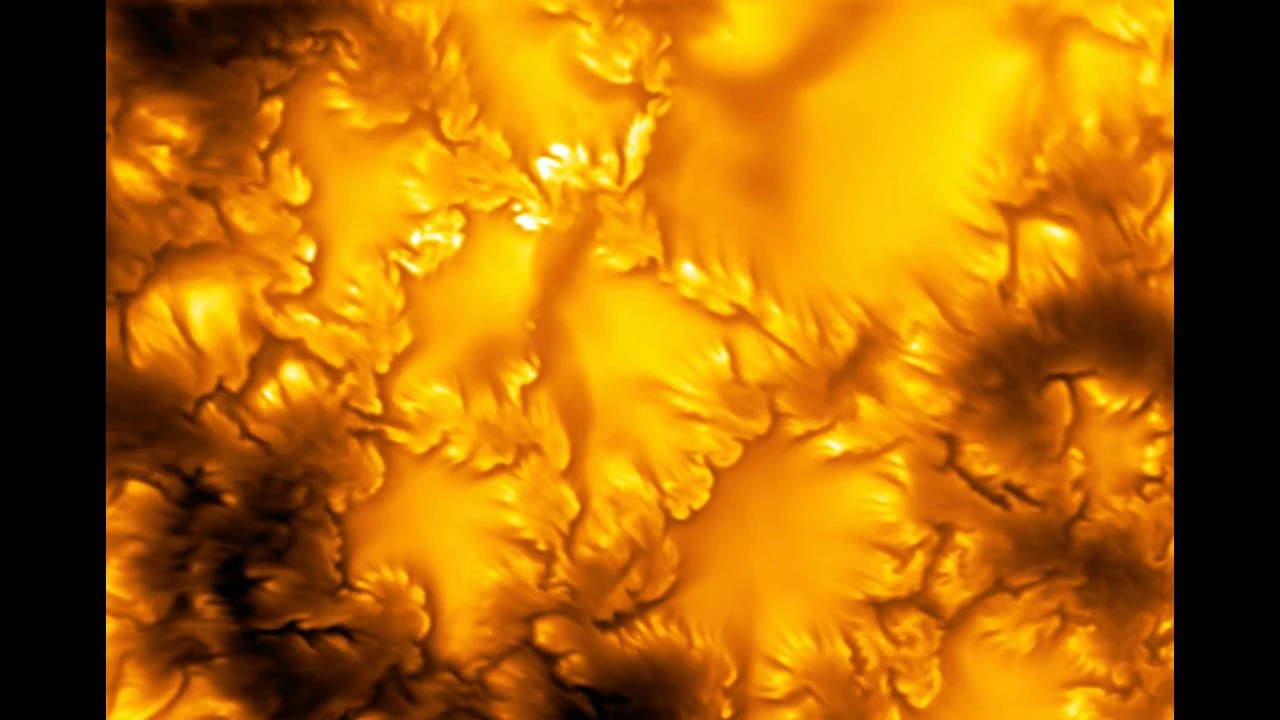










A stunning image reveals the sun in unprecedented detail.
The U.S. National Science Foundation’s Daniel K. Inouye Solar Telescope captured the highest-resolution image of the sun ever taken. It shows features smaller than 12 miles across, offering a new view of the sun’s surface and activity.
Scientists have long studied how the sun’s magnetic energy drives events like solar flares and coronal mass ejections. These events can disrupt Earth’s communications and power systems. Understanding how the sun builds and releases this energy is a key goal for researchers.
The new image reveals ripples known as Kelvin-Helmholtz Instability, a phenomenon first observed in the 1870s. These patterns may help explain how the sun’s magnetic field lines twist and tangle, leading to powerful solar flares.
The image also shows possible clues to the mystery of the sun’s superheated corona. Researchers believe the instability seen in the image could help explain how the corona becomes millions of degrees hotter than the sun’s surface.