


Most bridges are made using steel, concrete, or wood. But in northeastern India, some communities have created bridges using something that is still alive: tree roots.
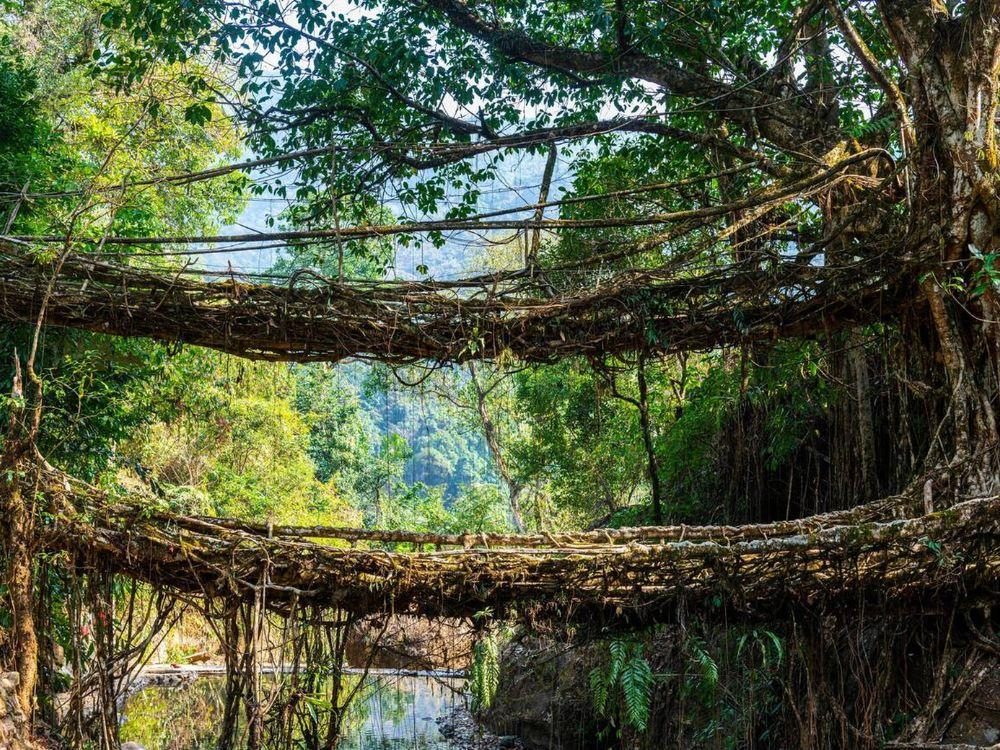
In Meghalaya, the Khasi and Jaintia communities developed a remarkable technique of guiding the aerial roots of rubber fig trees across rivers and streams.
Instead of constructing a bridge in a few weeks, they carefully train the roots over many years until they form a strong natural crossing.
Some of these bridges have been maintained and strengthened by generations of local people. As the roots continue growing and intertwining, the structures can become increasingly established.
One of the most famous examples is the Double Decker Living Root Bridge in Nongriat, where two root bridges exist at different heights.
Think about that: a bridge that isn't simply built from nature, but actually grows with nature.