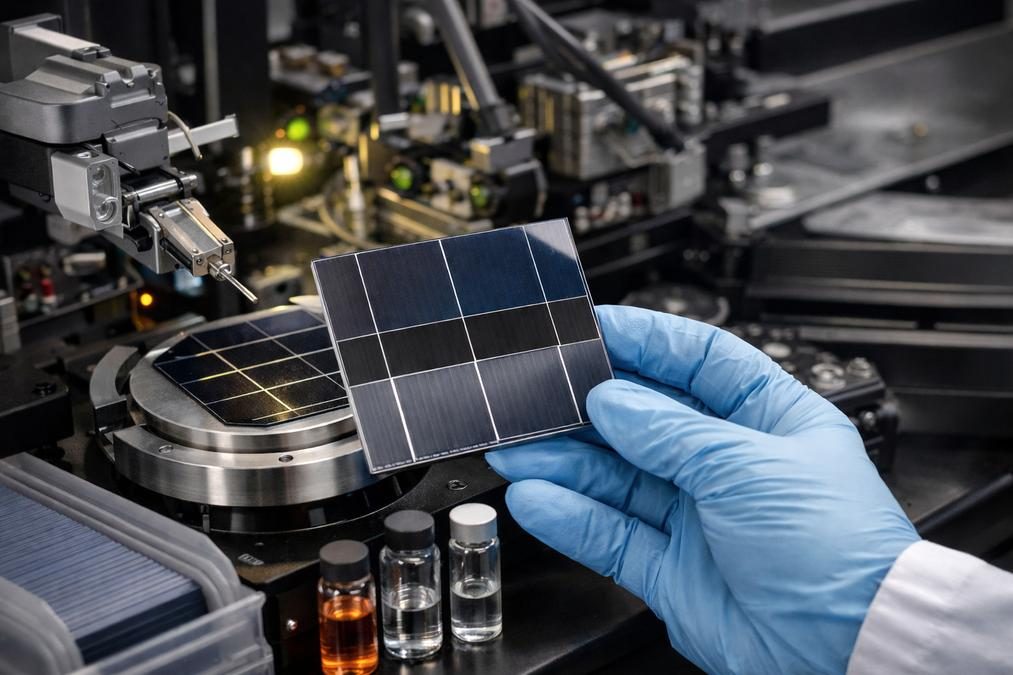




Traditional solar panels mainly use silicon to convert sunlight into electricity. But researchers are developing a different approach called tandem solar cells, which combines silicon with a material known as perovskite.
The two layers can capture different parts of sunlight, potentially allowing more energy to be converted into electricity.
According to the CAS Science Team’s 2026 technology outlook, perovskite-silicon tandem cells have achieved reported conversion efficiencies above 34% in research settings. That is significantly higher than the typical efficiency range of conventional commercial silicon panels.
The technology is promising, but there is still a difference between an impressive laboratory result and a solar panel that can operate reliably outdoors for decades. Researchers are working to improve durability, manufacturing costs and long-term performance.
If these challenges are solved, future solar panels could generate more electricity from the same amount of sunlight and installation space.