


The human eye has inspired scientists for generations, and a new development could help machines see the world in a much more natural way.
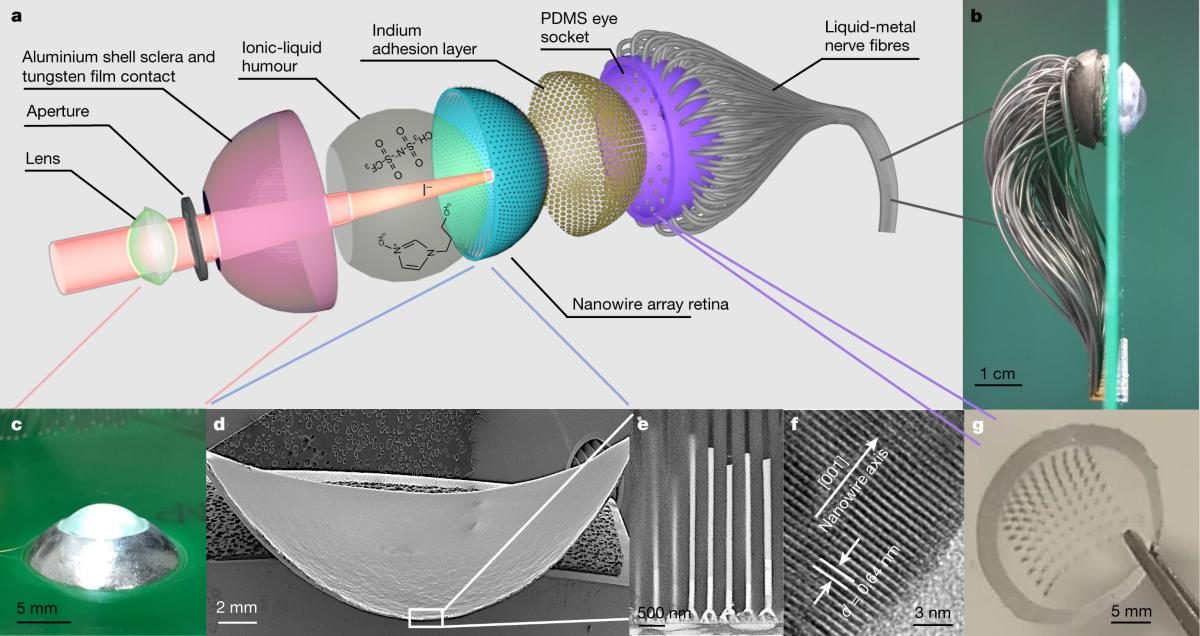
Researchers at the Hong Kong University of Science and Technology have developed a high-resolution bionic eye that combines full-colour imaging with advanced motion detection.
Inspired by the curved structure of the human retina, the device is designed to capture a wide field of view exceeding 160 degrees while processing movement more efficiently.
What makes this interesting is the combination of features. Many conventional cameras capture images first and then rely on computers to analyse movement.
The new approach incorporates event-driven motion detection, allowing the system to identify changes in a scene without constantly processing every visual detail in the same way.
The potential applications go beyond artificial vision. This technology could eventually support autonomous robots, advanced cameras and machines that need to react quickly to moving objects.
It is still a research development rather than a replacement for human eyesight, but it demonstrates how closely future camera systems may resemble the biology of the eye.