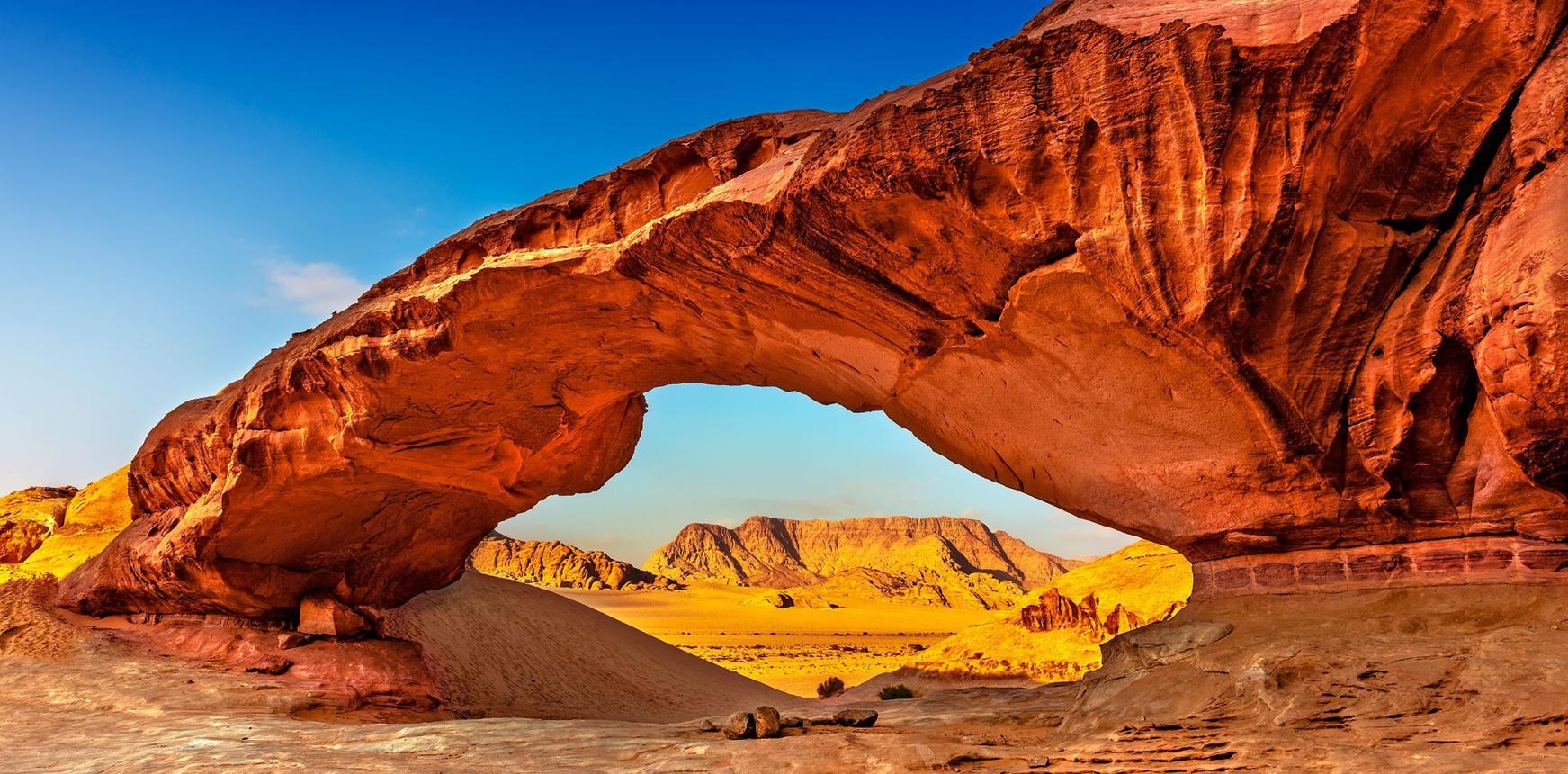

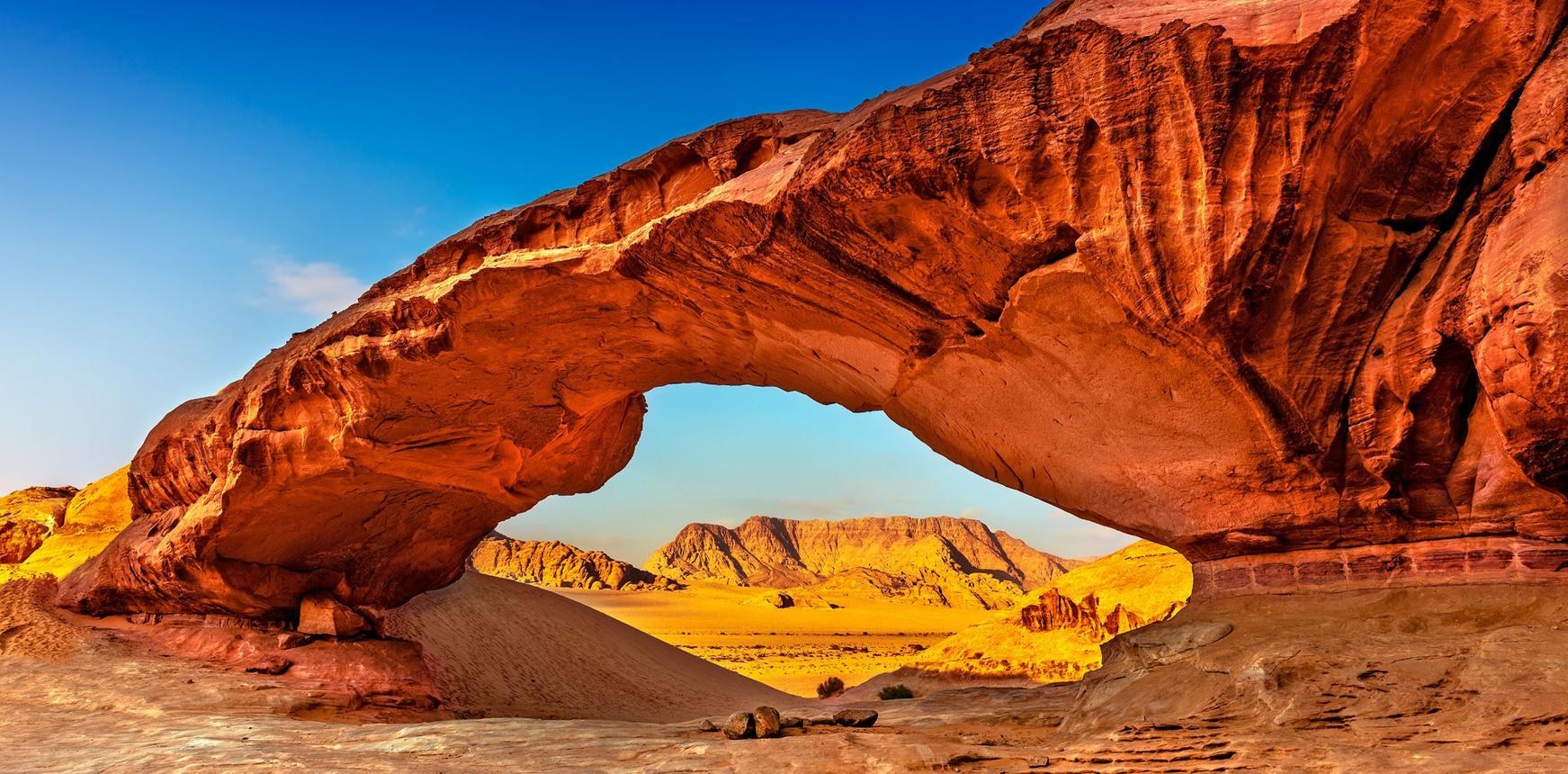
Imagine standing in a vast desert surrounded by towering red sandstone mountains, enormous natural arches and endless stretches of orange sand. The landscape looks so unusual that it could easily be mistaken for the surface of another planet.
Wadi Rum, also known as the Valley of the Moon, is located in southern Jordan. It is famous for its dramatic combination of red desert sand, massive sandstone formations, narrow canyons and towering cliffs.
The landscape has been shaped over millions of years through geological movements, weathering and erosion. Ancient sandstone layers were gradually exposed and sculpted by wind, water and changing environmental conditions.
This created remarkable formations, including natural arches, rock bridges, steep cliffs and unusual honeycomb-like patterns across the stone surfaces.
One of its most recognizable features is the contrast between the reddish sand and the enormous rock formations rising directly from the desert floor. Depending on the time of day, the mountains can appear deep red, orange, pink or purple as sunlight changes across their surfaces.
But Wadi Rum is not just a beautiful desert. It also holds an extraordinary record of human history. Archaeological discoveries include approximately 25,000 rock carvings, 20,000 inscriptions and numerous remains that document around 12,000 years of human occupation.
The area is also home to Bedouin communities whose traditions, knowledge and way of life are closely connected to this desert environment. Visitors can explore the landscape through guided jeep tours, hiking, camel experiences and overnight stays in desert camps.
At night, the wide-open desert offers incredible views of the stars away from major city lights.
Its otherworldly scenery has also appeared in famous films, including Lawrence of Arabia and The Martian. In fact, its unusual terrain is one reason filmmakers have used it to represent distant planets.
Wadi Rum became a UNESCO World Heritage Site in 2011 because of its exceptional natural landscape and cultural importance. It is a destination where geological wonders, ancient history and desert culture come together in one unforgettable setting.