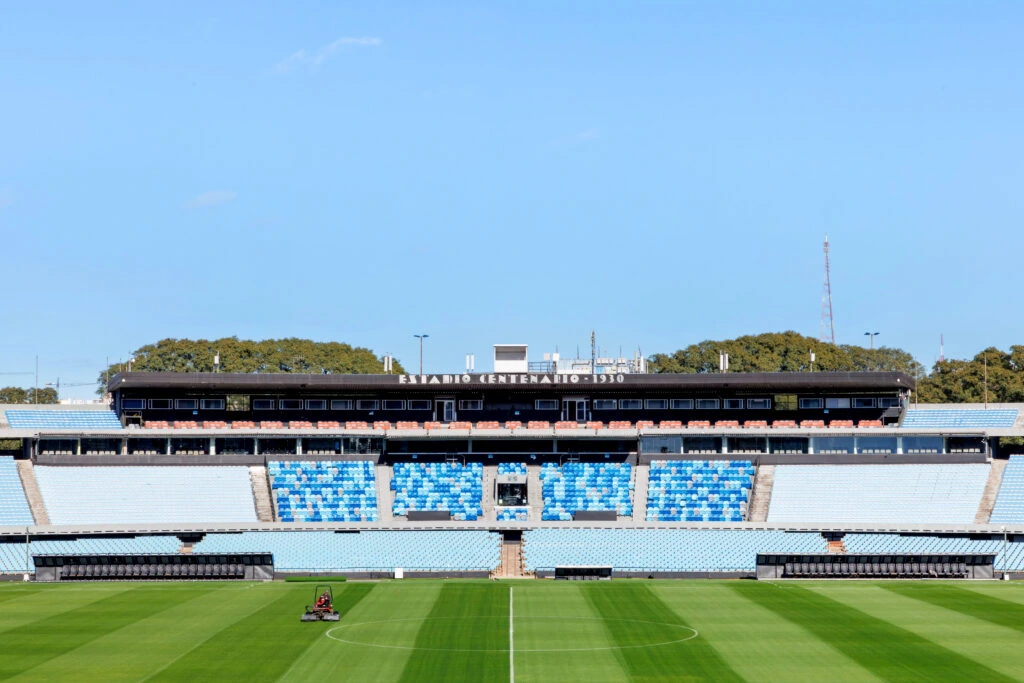
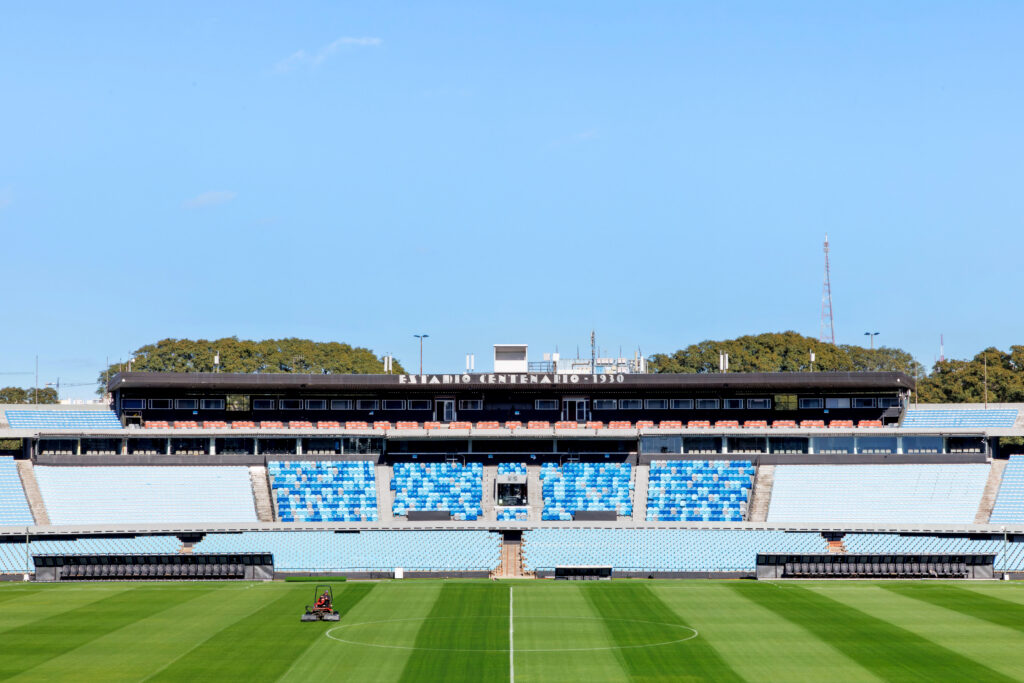



Centenario Stadium wasn’t completed in time for the first-ever World Cup match in 1930. It was, however, ready for Uruguay’s World Cup victory, and today, beneath its pitch, students attend a fully operational primary school.
When Uruguay was selected to host the first World Cup, they promised to build a stadium worthy of a tournament that had never been attempted before.
The timing could hardly have been better: Uruguay was celebrating the 100th anniversary of its constitution (hence, Estadio Centenario) and was the globe’s first football superpower, following gold medals at the 1924 and 1928 Olympics.
Concrete work began just five months before the first match, turning construction into a race against the clock.
Greek, Italian, and Yugoslav immigrants worked into the night, each bringing different languages, backgrounds, and presumably plenty of opinions about how the stadium should be built. Architect Juan Antonio Scasso called the multilingual worksite the “Tower of Babel.