



A star exploded in a distant galaxy, but astronomers managed to identify exactly which star it had been before its dramatic death.
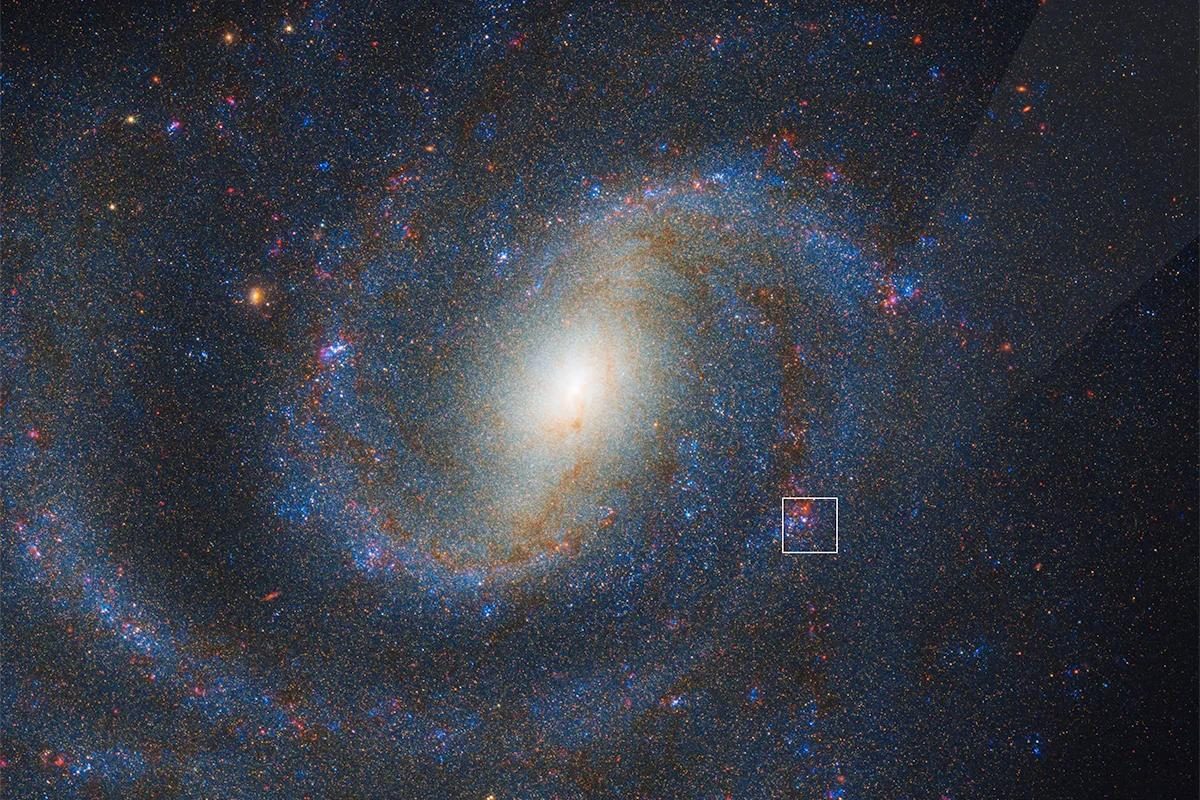
In February 2026, the European Space Agency announced that the James Webb Space Telescope had identified the original star behind a supernova called 2025pht.
The star was a red supergiant located in galaxy NGC 1637, approximately 40 million light-years away. Before it exploded, the star was surrounded by an unusually thick shell of dust.
That dust was so dense that the star could not be identified in earlier Hubble observations. Webb’s infrared instruments were able to see through the obscuring material and reveal the hidden stellar object in archived images taken before the explosion.
Scientists also found evidence that the surrounding dust was rich in carbon, an unexpected feature that may offer clues about the star’s final stages.
Why this discovery matters: Astronomers have struggled to explain why some massive stars expected to explode as supernovas are difficult to identify beforehand. This discovery supports the idea that thick clouds of dust can hide some of these stars from ordinary observations.
For the first time, Webb provided a published identification of a supernova’s original star using its own observations.